AIJOE.UK
Learn AI. Write Better Prompts. Create Better Images.
Beginner-friendly guides, ready-to-copy prompts and creative AI tools from AIJoe.
Anomalies
Uncanny Phenomena — Cinematic Video Prompt Pack
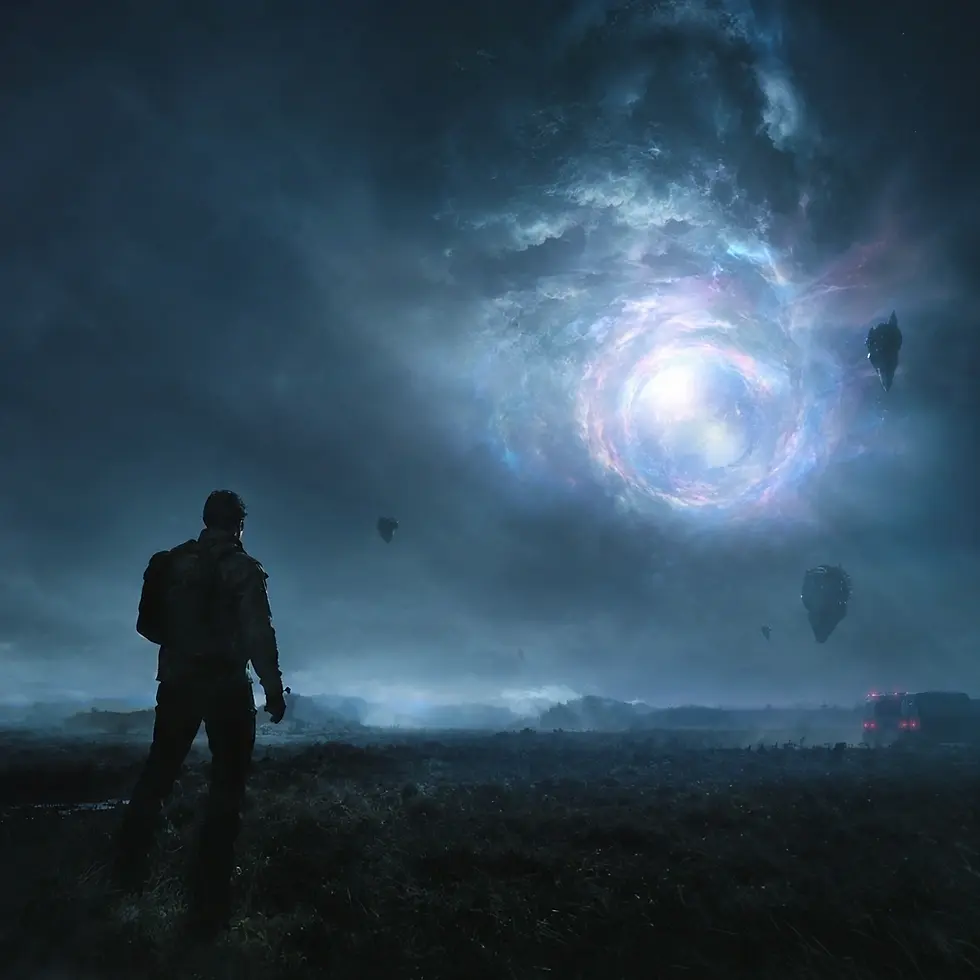
30 prompts · Sora, Veo
Video prompt: 15-second photorealistic cinematic 2K+ video. A research station corridor gains a sealed door between two camera passes; through its small window, the same corridor continues from an angle impossible for the building. A technician reaches for the handle as the exit sign behind them moves farther away. Camera uses a slow, controlled push or lateral tracking move, revealing the anomaly through precise physical detail rather than an explanatory cut. Build tension through scale, stillness, and one impossible detail; naturalistic lighting, atmospheric depth, coherent motion, high-detail surfaces.
Audio prompt: Sound design for The Corridor That Adds a Door: layer scene-specific ambience and tactile sound effects suggested by architecture, corridor, door, impossible-space, suspense; use a restrained cinematic score that builds with the reveal, plus intelligible dialogue or voice where the scene calls for it. Mix clear foreground detail with distant atmospheric depth.
Lip-sync direction: Allow spoken dialogue when supplied. Synchronize visible mouth shapes precisely to the provided speech; preserve the original wording and do not invent extra lines.
Subtitle direction: Subtitles are allowed when requested. Accurately time concise subtitles to supplied dialogue, narration, or accessibility captions; do not add unspoken words.
The Corridor That Adds a Door
1
Video prompt: 13-second photorealistic cinematic 2K+ video. In a deserted city street, rain lifts from every puddle and climbs into a low cloud beneath an overpass. One umbrella remains dry on the pavement while its shadow ripples across the ceiling. Camera uses a slow, controlled push or lateral tracking move, revealing the anomaly through precise physical detail rather than an explanatory cut. Build tension through scale, stillness, and one impossible detail; naturalistic lighting, atmospheric depth, coherent motion, high-detail surfaces.
Audio prompt: Sound design for The Rain That Falls Upward: layer scene-specific ambience and tactile sound effects suggested by weather, rain, gravity, city, surreal; use a restrained cinematic score that builds with the reveal, plus intelligible dialogue or voice where the scene calls for it. Mix clear foreground detail with distant atmospheric depth.
Lip-sync direction: Allow spoken dialogue when supplied. Synchronize visible mouth shapes precisely to the provided speech; preserve the original wording and do not invent extra lines.
Subtitle direction: Subtitles are allowed when requested. Accurately time concise subtitles to supplied dialogue, narration, or accessibility captions; do not add unspoken words.
The Rain That Falls Upward
2
Video prompt: 11-second photorealistic cinematic 2K+ video. An astronomer tracks a single moon through an observatory telescope, while the window reflection shows a second moon moving against the stars. The reflected moon slowly crosses the real one without eclipsing it. Camera uses a slow, controlled push or lateral tracking move, revealing the anomaly through precise physical detail rather than an explanatory cut. Build tension through scale, stillness, and one impossible detail; naturalistic lighting, atmospheric depth, coherent motion, high-detail surfaces.
Audio prompt: Sound design for The Second Moon in the Window: layer scene-specific ambience and tactile sound effects suggested by moon, reflection, observatory, sky, anomaly; use a restrained cinematic score that builds with the reveal, plus intelligible dialogue or voice where the scene calls for it. Mix clear foreground detail with distant atmospheric depth.
Lip-sync direction: Allow spoken dialogue when supplied. Synchronize visible mouth shapes precisely to the provided speech; preserve the original wording and do not invent extra lines.
Subtitle direction: Subtitles are allowed when requested. Accurately time concise subtitles to supplied dialogue, narration, or accessibility captions; do not add unspoken words.
The Second Moon in the Window
3
Video prompt: 16-second photorealistic cinematic 2K+ video. A survey team walks toward a clearing that remains the same distance away. Trees subtly rotate to keep their pale scars facing the camera; a compass needle points straight down. Camera uses a slow, controlled push or lateral tracking move, revealing the anomaly through precise physical detail rather than an explanatory cut. Build tension through scale, stillness, and one impossible detail; naturalistic lighting, atmospheric depth, coherent motion, high-detail surfaces.
Audio prompt: Sound design for The Forest with No Center: layer scene-specific ambience and tactile sound effects suggested by forest, navigation, trees, fog, impossible-space; use a restrained cinematic score that builds with the reveal, plus intelligible dialogue or voice where the scene calls for it. Mix clear foreground detail with distant atmospheric depth.
Lip-sync direction: Allow spoken dialogue when supplied. Synchronize visible mouth shapes precisely to the provided speech; preserve the original wording and do not invent extra lines.
Subtitle direction: Subtitles are allowed when requested. Accurately time concise subtitles to supplied dialogue, narration, or accessibility captions; do not add unspoken words.
The Forest with No Center
4
Video prompt: 14-second photorealistic cinematic 2K+ video. In a dim archive, a technician hears surf from a silent black-and-white photograph of an empty room. As the camera pushes closer, the image gains a wet footprint that was absent a moment before. Camera uses a slow, controlled push or lateral tracking move, revealing the anomaly through precise physical detail rather than an explanatory cut. Build tension through scale, stillness, and one impossible detail; naturalistic lighting, atmospheric depth, coherent motion, high-detail surfaces.
Audio prompt: Sound design for The Sound in the Photograph: layer scene-specific ambience and tactile sound effects suggested by photograph, audio, archive, memory, uncanny; use a restrained cinematic score that builds with the reveal, plus intelligible dialogue or voice where the scene calls for it. Mix clear foreground detail with distant atmospheric depth.
Lip-sync direction: Allow spoken dialogue when supplied. Synchronize visible mouth shapes precisely to the provided speech; preserve the original wording and do not invent extra lines.
Subtitle direction: Subtitles are allowed when requested. Accurately time concise subtitles to supplied dialogue, narration, or accessibility captions; do not add unspoken words.
The Sound in the Photograph
5
Video prompt: 12-second photorealistic cinematic 2K+ video. A freight elevator descends through a concrete tower; the floor indicator passes levels higher than the building. Each opening reveals the same landing, but with one detail changed and the elevator reflection arriving late. Camera uses a slow, controlled push or lateral tracking move, revealing the anomaly through precise physical detail rather than an explanatory cut. Build tension through scale, stillness, and one impossible detail; naturalistic lighting, atmospheric depth, coherent motion, high-detail surfaces.
Audio prompt: Sound design for The Elevator with Too Many Floors: layer scene-specific ambience and tactile sound effects suggested by elevator, architecture, numbers, descent, suspense; use a restrained cinematic score that builds with the reveal, plus intelligible dialogue or voice where the scene calls for it. Mix clear foreground detail with distant atmospheric depth.
Lip-sync direction: Allow spoken dialogue when supplied. Synchronize visible mouth shapes precisely to the provided speech; preserve the original wording and do not invent extra lines.
Subtitle direction: Subtitles are allowed when requested. Accurately time concise subtitles to supplied dialogue, narration, or accessibility captions; do not add unspoken words.
The Elevator with Too Many Floors
6
Video prompt: 10-second photorealistic cinematic 2K+ video. At dusk, a lone pedestrian approaches a long wall. Their shadow reaches the corner several seconds before they do, then turns to face the camera while the person keeps walking. Camera uses a slow, controlled push or lateral tracking move, revealing the anomaly through precise physical detail rather than an explanatory cut. Build tension through scale, stillness, and one impossible detail; naturalistic lighting, atmospheric depth, coherent motion, high-detail surfaces.
Audio prompt: Sound design for The Shadow That Arrives First: layer scene-specific ambience and tactile sound effects suggested by shadow, time, street, human, suspense; use a restrained cinematic score that builds with the reveal, plus intelligible dialogue or voice where the scene calls for it. Mix clear foreground detail with distant atmospheric depth.
Lip-sync direction: Allow spoken dialogue when supplied. Synchronize visible mouth shapes precisely to the provided speech; preserve the original wording and do not invent extra lines.
Subtitle direction: Subtitles are allowed when requested. Accurately time concise subtitles to supplied dialogue, narration, or accessibility captions; do not add unspoken words.
The Shadow That Arrives First
7
Video prompt: 15-second photorealistic cinematic 2K+ video. Inside an abandoned lakeside cabin, water ripples across the ceiling as if a deep lake hangs above the roof. A chair slowly floats upward, stopping just short of the mirrored surface. Camera uses a slow, controlled push or lateral tracking move, revealing the anomaly through precise physical detail rather than an explanatory cut. Build tension through scale, stillness, and one impossible detail; naturalistic lighting, atmospheric depth, coherent motion, high-detail surfaces.
Audio prompt: Sound design for The Lake Above the Ceiling: layer scene-specific ambience and tactile sound effects suggested by lake, upside-down, cabin, water, surreal; use a restrained cinematic score that builds with the reveal, plus intelligible dialogue or voice where the scene calls for it. Mix clear foreground detail with distant atmospheric depth.
Lip-sync direction: Allow spoken dialogue when supplied. Synchronize visible mouth shapes precisely to the provided speech; preserve the original wording and do not invent extra lines.
Subtitle direction: Subtitles are allowed when requested. Accurately time concise subtitles to supplied dialogue, narration, or accessibility captions; do not add unspoken words.
The Lake Above the Ceiling
8
Video prompt: 13-second photorealistic cinematic 2K+ video. In an isolated listening post, an old radio fills the room with textured static and fragments of a calm voice addressing someone off-camera. The analog dial moves by itself, stopping between stations as the antenna bends inward. Camera uses a slow, controlled push or lateral tracking move, revealing the anomaly through precise physical detail rather than an explanatory cut. Build tension through scale, stillness, and one impossible detail; naturalistic lighting, atmospheric depth, coherent motion, high-detail surfaces.
Audio prompt: Sound design for The Static That Knows Your Name: layer scene-specific ambience and tactile sound effects suggested by radio, static, voice, signal, isolation; use a restrained cinematic score that builds with the reveal, plus intelligible dialogue or voice where the scene calls for it. Mix clear foreground detail with distant atmospheric depth.
Lip-sync direction: Allow spoken dialogue when supplied. Synchronize visible mouth shapes precisely to the provided speech; preserve the original wording and do not invent extra lines.
Subtitle direction: Subtitles are allowed when requested. Accurately time concise subtitles to supplied dialogue, narration, or accessibility captions; do not add unspoken words.
The Static That Knows Your Name
9
Video prompt: 11-second photorealistic cinematic 2K+ video. A stairwell descends through a derelict hotel; each landing is the same place at a different age, paint peeling backward into fresh plaster as the camera goes lower. A dusty handprint appears ahead of the lens. Camera uses a slow, controlled push or lateral tracking move, revealing the anomaly through precise physical detail rather than an explanatory cut. Build tension through scale, stillness, and one impossible detail; naturalistic lighting, atmospheric depth, coherent motion, high-detail surfaces.
Audio prompt: Sound design for The Staircase Returning Older: layer scene-specific ambience and tactile sound effects suggested by staircase, time, building, repetition, mystery; use a restrained cinematic score that builds with the reveal, plus intelligible dialogue or voice where the scene calls for it. Mix clear foreground detail with distant atmospheric depth.
Lip-sync direction: Allow spoken dialogue when supplied. Synchronize visible mouth shapes precisely to the provided speech; preserve the original wording and do not invent extra lines.
Subtitle direction: Subtitles are allowed when requested. Accurately time concise subtitles to supplied dialogue, narration, or accessibility captions; do not add unspoken words.
The Staircase Returning Older
10
Showing 10 of 30 prompts. Sign up free to see all 30 and download the pack.