New: free AI art prompts every week in the Prompt LibraryExplore prompts
top of page

AIJOE.UK

Learn AI. Write Better Prompts. Create Better Images.

Beginner-friendly guides, ready-to-copy prompts and creative AI tools from AIJoe.

AI Art Prompt Library

Midjourney

Extreme macro of a jewel-winged vampire moth resting on a cracked antique mirror, velvet black scales flecked with crimson, fangs barely visible beneath furred palps, candle reflection splintered across the fractured glass, dust motes caught in a single warm beam, shallow focus, opulent and unsettling mood.

Extreme macro of a jewel-winged vampire moth resting on a cracked antique mirror, velvet black scales flecked with crimson, fangs barely visible beneath furred palps, candle reflection splintered across the fractured glass, dust motes caught in a single warm beam, shallow focus, opulent and unsettling mood.

true

"Sign up free to access advanced and expert-level prompts."

Sign Up Free

Unlock Advanced Prompts

Already a member? Log In
Extreme macro of a jewel-winged vampire moth resting on a cracked antique mirror, velvet black scales flecked with crimson, fangs barely visible beneath furred palps, candle reflection splintered across the fractured glass, dust motes caught in a single warm beam, shallow focus, opulent and unsettling mood.

Vampire moth on cracked mirror

0

Midjourney

A surreal cathedral grown from antlers and wolf bone, a monumental werewolf kneeling at its altar under a blood-orange harvest moon, fur rippling like storm cloud, stained-glass shards scattering violet light across the flagstones, ravens spiralling through the vaulted ribs, symmetrical composition, dreamlike and thunderously epic mood.

A surreal cathedral grown from antlers and wolf bone, a monumental werewolf kneeling at its altar under a blood-orange harvest moon, fur rippling like storm cloud, stained-glass shards scattering violet light across the flagstones, ravens spiralling through the vaulted ribs, symmetrical composition, dreamlike and thunderously epic mood.

true

"Sign up free to access advanced and expert-level prompts."

Sign Up Free

Unlock Advanced Prompts

Already a member? Log In
A surreal cathedral grown from antlers and wolf bone, a monumental werewolf kneeling at its altar under a blood-orange harvest moon, fur rippling like storm cloud, stained-glass shards scattering violet light across the flagstones, ravens spiralling through the vaulted ribs, symmetrical composition, dreamlike and thunderously epic mood.

Werewolf cathedral of antlers

0

​

Extreme advanced image prompt: ancient olive grove above a volcanic crater, built from acrylic pour cells, carrying tiny figures for scale; hard rim light and clean specular highlights. Layer foreground, middle ground and background, show accurate material behaviour, tactile texture, refined composition, cinematic depth, high-quality AI image generation style, no text, no logo, no watermark.

Extreme advanced image prompt: ancient olive grove above a volcanic crater, built from acrylic pour cells, carrying tiny figures for scale; hard rim light and clean specular highlights. Layer foreground, middle ground and background, show accurate material behaviour, tactile texture, refined composition, cinematic depth, high-quality AI image generation style, no text, no logo, no watermark.

true

"Sign up free to access advanced and expert-level prompts."

Sign Up Free

Unlock Advanced Prompts

Already a member? Log In
Extreme advanced image prompt: ancient olive grove above a volcanic crater, built from acrylic pour cells, carrying tiny figures for scale; hard rim light and clean specular highlights. Layer foreground, middle ground and background, show accurate material behaviour, tactile texture, refined composition, cinematic depth, high-quality AI image generation style, no text, no logo, no watermark.

Acrylic Pour Cells Ancient Olive Grove 260

32

Midjourney

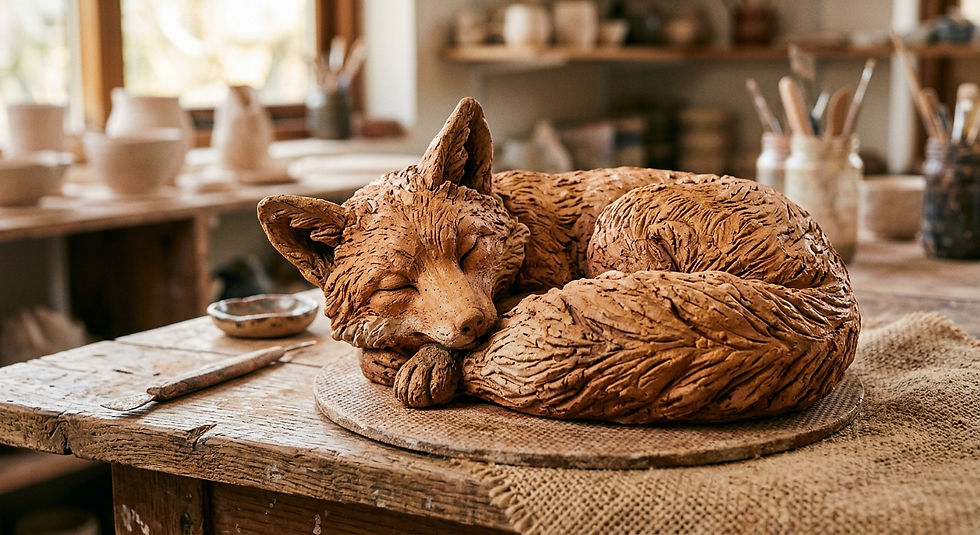
A handcrafted stoneware clay sculpture of a sleeping fox, matte textured finish, earthy terracotta tones, warm natural studio lighting.

A handcrafted stoneware clay sculpture of a sleeping fox, matte textured finish, earthy terracotta tones, warm natural studio lighting.

​

"Sign up free to access advanced and expert-level prompts."

Sign Up Free

Unlock Advanced Prompts

Already a member? Log In
A handcrafted stoneware clay sculpture of a sleeping fox, matte textured finish, earthy terracotta tones, warm natural studio lighting.

clay sculpture of a sleeping fox

16

Midjourney

A miniature whimsical fairy cottage made of unglazed polymer clay, detailed cobblestone walls, mossy roof details, macro photography.

A miniature whimsical fairy cottage made of unglazed polymer clay, detailed cobblestone walls, mossy roof details, macro photography.

​

"Sign up free to access advanced and expert-level prompts."

Sign Up Free

Unlock Advanced Prompts

Already a member? Log In
A miniature whimsical fairy cottage made of unglazed polymer clay, detailed cobblestone walls, mossy roof details, macro photography.

A miniature whimsical fairy cottage

2

Midjourney

A delicate ceramic clay vase featuring raised relief flower patterns, soft pastel glazes, smooth finish, soft morning window light.

A delicate ceramic clay vase featuring raised relief flower patterns, soft pastel glazes, smooth finish, soft morning window light.

​

"Sign up free to access advanced and expert-level prompts."

Sign Up Free

Unlock Advanced Prompts

Already a member? Log In
A delicate ceramic clay vase featuring raised relief flower patterns, soft pastel glazes, smooth finish, soft morning window light.

A delicate ceramic clay vase

2

Midjourney

An abstract ceramic sculpture with intertwining ribbon-like ribbons of white porcelain clay, satin finish, high-contrast studio shadows.

An abstract ceramic sculpture with intertwining ribbon-like ribbons of white porcelain clay, satin finish, high-contrast studio shadows.

​

"Sign up free to access advanced and expert-level prompts."

Sign Up Free

Unlock Advanced Prompts

Already a member? Log In
An abstract ceramic sculpture with intertwining ribbon-like ribbons of white porcelain clay, satin finish, high-contrast studio shadows.

Abstract ceramic sculpture

0

Midjourney

A bust sculpture of an elderly man sculpted in coarse terra cotta clay, visible thumbprints and tool marks, dramatic side lighting.

A bust sculpture of an elderly man sculpted in coarse terra cotta clay, visible thumbprints and tool marks, dramatic side lighting.

​

"Sign up free to access advanced and expert-level prompts."

Sign Up Free

Unlock Advanced Prompts

Already a member? Log In
A bust sculpture of an elderly man sculpted in coarse terra cotta clay, visible thumbprints and tool marks, dramatic side lighting.

Bust sculpture of an elderly man

4

Midjourney

A realistic polymer clay miniature bowl filled with colorful ramen noodles and toppings, glossy finish, close-up shot.

A realistic polymer clay miniature bowl filled with colorful ramen noodles and toppings, glossy finish, close-up shot.

​

"Sign up free to access advanced and expert-level prompts."

Sign Up Free

Unlock Advanced Prompts

Already a member? Log In
A realistic polymer clay miniature bowl filled with colorful ramen noodles and toppings, glossy finish, close-up shot.

Realistic polymer clay miniature bowl

1

Midjourney

A majestic dragon figurine sculpted from dark stoneware clay with gold leaf accents on the scales, detailed craft shop aesthetic.

A majestic dragon figurine sculpted from dark stoneware clay with gold leaf accents on the scales, detailed craft shop aesthetic.

​

"Sign up free to access advanced and expert-level prompts."

Sign Up Free

Unlock Advanced Prompts

Already a member? Log In
A majestic dragon figurine sculpted from dark stoneware clay with gold leaf accents on the scales, detailed craft shop aesthetic.

A majestic dragon figurine

​

Midjourney

A wheel-thrown ceramic coffee mug with a reactive turquoise glaze drip over raw dark brown clay, rustic pottery style.

A wheel-thrown ceramic coffee mug with a reactive turquoise glaze drip over raw dark brown clay, rustic pottery style.

​

"Sign up free to access advanced and expert-level prompts."

Sign Up Free

Unlock Advanced Prompts

Already a member? Log In
A wheel-thrown ceramic coffee mug with a reactive turquoise glaze drip over raw dark brown clay, rustic pottery style.

A wheel-thrown ceramic coffee mug

0

Midjourney

A textured clay tile depicting an impressionist ocean wave, blend of deep blue, white, and seafoam glazes, tactile surface.

A textured clay tile depicting an impressionist ocean wave, blend of deep blue, white, and seafoam glazes, tactile surface.

​

"Sign up free to access advanced and expert-level prompts."

Sign Up Free

Unlock Advanced Prompts

Already a member? Log In
A textured clay tile depicting an impressionist ocean wave, blend of deep blue, white, and seafoam glazes, tactile surface.

A textured clay tile

1

​

A retro-futuristic robot figurine made of hand-molded clay, painted with metallic copper and patinated green glazes.

A retro-futuristic robot figurine made of hand-molded clay, painted with metallic copper and patinated green glazes.

true

"Sign up free to access advanced and expert-level prompts."

Sign Up Free

Unlock Advanced Prompts

Already a member? Log In
A retro-futuristic robot figurine made of hand-molded clay, painted with metallic copper and patinated green glazes.

A retro-futuristic robot figurine

18

AI Image Generator

A column of white birch smoke rising from a single split log fire on a still morning, photographed against a dark pine forest background that reads as near-black, the smoke column backlit by a low winter sun at 15 degrees above the horizon. The smoke is photographed at 1/500s, the turbulent internal structure frozen — each eddy and convection cell visible as a discrete form within the overall column. Shot on a Canon EOS R5 with a 500mm lens at f/8, the extreme telephoto compression stacking the smoke layers into a two-dimensional composition. Colour palette: pure white smoke, cadmium yellow backlight, near-black forest.

A column of white birch smoke rising from a single split log fire on a still morning, photographed against a dark pine forest background that reads as near-black, the smoke column backlit by a low winter sun at 15 degrees above the horizon. The smoke is photographed at 1/500s, the turbulent internal structure frozen — each eddy and convection cell visible as a discrete form within the overall column. Shot on a Canon EOS R5 with a 500mm lens at f/8, the extreme telephoto compression stacking the smoke layers into a two-dimensional composition. Colour palette: pure white smoke, cadmium yellow backlight, near-black forest.

true

"Sign up free to access advanced and expert-level prompts."

Sign Up Free

Unlock Advanced Prompts

Already a member? Log In
A column of white birch smoke rising from a single split log fire on a still morning, photographed against a dark pine forest background that reads as near-black, the smoke column backlit by a low winter sun at 15 degrees above the horizon. The smoke is photographed at 1/500s, the turbulent internal structure frozen — each eddy and convection cell visible as a discrete form within the overall column. Shot on a Canon EOS R5 with a 500mm lens at f/8, the extreme telephoto compression stacking the smoke layers into a two-dimensional composition. Colour palette: pure white smoke, cadmium yellow backlight, near-black forest.

Smoke Column

2

AI Image Generator

A prescribed burn forest fire front photographed at dusk, the advancing flame line a continuous horizontal band of orange and gold spanning the full frame width, the tree trunks above silhouetted black against the fire glow, the burnt ground below a field of glowing orange embers. Shot on a Canon EOS R5 with a 16-35mm at 16mm, f/8, the wide angle encompassing the full fire front from left to right edge. The smoke canopy above the fire is backlit by the setting sun in shades of deep rose and purple, the colour palette split between the warm fire below and the cool sky above.

A prescribed burn forest fire front photographed at dusk, the advancing flame line a continuous horizontal band of orange and gold spanning the full frame width, the tree trunks above silhouetted black against the fire glow, the burnt ground below a field of glowing orange embers. Shot on a Canon EOS R5 with a 16-35mm at 16mm, f/8, the wide angle encompassing the full fire front from left to right edge. The smoke canopy above the fire is backlit by the setting sun in shades of deep rose and purple, the colour palette split between the warm fire below and the cool sky above.

true

"Sign up free to access advanced and expert-level prompts."

Sign Up Free

Unlock Advanced Prompts

Already a member? Log In
A prescribed burn forest fire front photographed at dusk, the advancing flame line a continuous horizontal band of orange and gold spanning the full frame width, the tree trunks above silhouetted black against the fire glow, the burnt ground below a field of glowing orange embers. Shot on a Canon EOS R5 with a 16-35mm at 16mm, f/8, the wide angle encompassing the full fire front from left to right edge. The smoke canopy above the fire is backlit by the setting sun in shades of deep rose and purple, the colour palette split between the warm fire below and the cool sky above.

Forest Fire Front

4

AI Image Generator

Concorde G-BOAC photographed on its final approach to Manchester Airport in November 2003, the aircraft in full landing configuration — nose drooped, visor down, gear extended — shot from the end of the runway threshold with a 600mm lens at f/8, the aircraft filling the upper third of the frame with the grey Manchester sky below. The heat haze from the four Olympus engines distorts the air behind the aircraft into a visible shimmer. technically precise, emotionally loaded, the end of an era visible in a single frame.

Concorde G-BOAC photographed on its final approach to Manchester Airport in November 2003, the aircraft in full landing configuration — nose drooped, visor down, gear extended — shot from the end of the runway threshold with a 600mm lens at f/8, the aircraft filling the upper third of the frame with the grey Manchester sky below. The heat haze from the four Olympus engines distorts the air behind the aircraft into a visible shimmer. technically precise, emotionally loaded, the end of an era visible in a single frame.

true

"Sign up free to access advanced and expert-level prompts."

Sign Up Free

Unlock Advanced Prompts

Already a member? Log In
Concorde G-BOAC photographed on its final approach to Manchester Airport in November 2003, the aircraft in full landing configuration — nose drooped, visor down, gear extended — shot from the end of the runway threshold with a 600mm lens at f/8, the aircraft filling the upper third of the frame with the grey Manchester sky below. The heat haze from the four Olympus engines distorts the air behind the aircraft into a visible shimmer.  technically precise, emotionally loaded, the end of an era visible in a single frame.

Concorde Retirement

15

AI Image Generator

A Formula One car at the exit of a high-speed corner, the front-right tyre generating visible tyre smoke from understeer, the driver's steering input visible in the front wheel lock angle, the car's weight clearly transferred to the outside rear. Shot from a marshal's post at apex, Canon EOS R5 with 400mm f/2.8 at 1/2000s, the panning technique holding the car sharp while the background grandstand blurs to a continuous horizontal streak of colour. The composition captures the physics of a car at the limit — every aerodynamic and mechanical force made visible simultaneously.

A Formula One car at the exit of a high-speed corner, the front-right tyre generating visible tyre smoke from understeer, the driver's steering input visible in the front wheel lock angle, the car's weight clearly transferred to the outside rear. Shot from a marshal's post at apex, Canon EOS R5 with 400mm f/2.8 at 1/2000s, the panning technique holding the car sharp while the background grandstand blurs to a continuous horizontal streak of colour. The composition captures the physics of a car at the limit — every aerodynamic and mechanical force made visible simultaneously.

true

"Sign up free to access advanced and expert-level prompts."

Sign Up Free

Unlock Advanced Prompts

Already a member? Log In
A Formula One car at the exit of a high-speed corner, the front-right tyre generating visible tyre smoke from understeer, the driver's steering input visible in the front wheel lock angle, the car's weight clearly transferred to the outside rear. Shot from a marshal's post at apex, Canon EOS R5 with 400mm f/2.8 at 1/2000s, the panning technique holding the car sharp while the background grandstand blurs to a continuous horizontal streak of colour. The composition captures the physics of a car at the limit — every aerodynamic and mechanical force made visible simultaneously.

Formula One Understeer

​

AI Image Generator

A nuclear attack submarine in a dry dock, photographed from the dock floor looking up at the hull, the submarine's black rubber anechoic tiles filling the upper half of the frame, the dock's concrete walls and service gantries framing the lower half. The scale is given by a single dockworker in orange coveralls visible at the base of the rudder assembly. Shot on a Nikon Z9 with a 14mm lens at f/11, the curvature of the submarine hull distorting toward the bow. The palette is black rubber, grey concrete, orange safety gear — the monochrome severity of military hardware.

A nuclear attack submarine in a dry dock, photographed from the dock floor looking up at the hull, the submarine's black rubber anechoic tiles filling the upper half of the frame, the dock's concrete walls and service gantries framing the lower half. The scale is given by a single dockworker in orange coveralls visible at the base of the rudder assembly. Shot on a Nikon Z9 with a 14mm lens at f/11, the curvature of the submarine hull distorting toward the bow. The palette is black rubber, grey concrete, orange safety gear — the monochrome severity of military hardware.

true

"Sign up free to access advanced and expert-level prompts."

Sign Up Free

Unlock Advanced Prompts

Already a member? Log In
A nuclear attack submarine in a dry dock, photographed from the dock floor looking up at the hull, the submarine's black rubber anechoic tiles filling the upper half of the frame, the dock's concrete walls and service gantries framing the lower half. The scale is given by a single dockworker in orange coveralls visible at the base of the rudder assembly. Shot on a Nikon Z9 with a 14mm lens at f/11, the curvature of the submarine hull distorting toward the bow. The palette is black rubber, grey concrete, orange safety gear — the monochrome severity of military hardware.

Dry Dock Submarine

1

AI Image Generator

A Stanier Black Five steam locomotive at full working pressure departing a station in winter, the exhaust beaten down by a cross-wind and draped across the platform in a white wall of steam that swallows the rear coaches. Shot from the platform end at 50mm equivalent, Canon EOS R5, 1/500s to freeze the steam surface detail, f/5.6 to hold both the locomotive and the platform canopy. The locomotive is a black silhouette against the white steam, its motion blur zero — the steam providing all the impression of speed. Colour palette: black locomotive, white steam, amber station lamps, winter grey sky.

A Stanier Black Five steam locomotive at full working pressure departing a station in winter, the exhaust beaten down by a cross-wind and draped across the platform in a white wall of steam that swallows the rear coaches. Shot from the platform end at 50mm equivalent, Canon EOS R5, 1/500s to freeze the steam surface detail, f/5.6 to hold both the locomotive and the platform canopy. The locomotive is a black silhouette against the white steam, its motion blur zero — the steam providing all the impression of speed. Colour palette: black locomotive, white steam, amber station lamps, winter grey sky.

true

"Sign up free to access advanced and expert-level prompts."

Sign Up Free

Unlock Advanced Prompts

Already a member? Log In
A Stanier Black Five steam locomotive at full working pressure departing a station in winter, the exhaust beaten down by a cross-wind and draped across the platform in a white wall of steam that swallows the rear coaches. Shot from the platform end at 50mm equivalent, Canon EOS R5, 1/500s to freeze the steam surface detail, f/5.6 to hold both the locomotive and the platform canopy. The locomotive is a black silhouette against the white steam, its motion blur zero — the steam providing all the impression of speed. Colour palette: black locomotive, white steam, amber station lamps, winter grey sky.

Steam Locomotive Exhaust

1

AI Image Generator

The bow of a large container ship underway at 22 knots in the North Sea, photographed from directly ahead at water level from a fast RIB, the bow wave a perfect symmetrical wall of white water rising 4 metres at the hull and spreading outward at the Kelvin wake angle of 19.47 degrees. Shot on a Nikon Z9 at 1/2000s, 70mm, f/8, the camera 1 metre above the water surface. The container ship towers above — its hull a cliff of rust-streaked steel — while the sea ahead of the bow is perfectly flat dark grey. The palette is dark steel, white foam and the cold grey of the North Sea in November.

The bow of a large container ship underway at 22 knots in the North Sea, photographed from directly ahead at water level from a fast RIB, the bow wave a perfect symmetrical wall of white water rising 4 metres at the hull and spreading outward at the Kelvin wake angle of 19.47 degrees. Shot on a Nikon Z9 at 1/2000s, 70mm, f/8, the camera 1 metre above the water surface. The container ship towers above — its hull a cliff of rust-streaked steel — while the sea ahead of the bow is perfectly flat dark grey. The palette is dark steel, white foam and the cold grey of the North Sea in November.

true

"Sign up free to access advanced and expert-level prompts."

Sign Up Free

Unlock Advanced Prompts

Already a member? Log In
The bow of a large container ship underway at 22 knots in the North Sea, photographed from directly ahead at water level from a fast RIB, the bow wave a perfect symmetrical wall of white water rising 4 metres at the hull and spreading outward at the Kelvin wake angle of 19.47 degrees. Shot on a Nikon Z9 at 1/2000s, 70mm, f/8, the camera 1 metre above the water surface. The container ship towers above — its hull a cliff of rust-streaked steel — while the sea ahead of the bow is perfectly flat dark grey. The palette is dark steel, white foam and the cold grey of the North Sea in November.

Cargo Ship Bow Wave

​

AI Image Generator

An extreme macro of a 2x2 twill carbon fibre weave panel, each tow of fibres 3K — 3000 individual carbon filaments bundled together — the weave pattern creating a repeating diamond geometry across the surface. Under a single raking light at 8 degrees each tow reads as a convex lens surface with a specular highlight running along its crown, the adjacent tow in shadow. Shot on a Canon MP-E 65mm at 3:1 magnification, f/11, focus-stacked from 80 frames. The carbon surface is finished with a high-gloss clear coat that adds a second reflective layer above the weave texture, creating a parallax shift between the surface reflection and the weave beneath.

An extreme macro of a 2x2 twill carbon fibre weave panel, each tow of fibres 3K — 3000 individual carbon filaments bundled together — the weave pattern creating a repeating diamond geometry across the surface. Under a single raking light at 8 degrees each tow reads as a convex lens surface with a specular highlight running along its crown, the adjacent tow in shadow. Shot on a Canon MP-E 65mm at 3:1 magnification, f/11, focus-stacked from 80 frames. The carbon surface is finished with a high-gloss clear coat that adds a second reflective layer above the weave texture, creating a parallax shift between the surface reflection and the weave beneath.

true

"Sign up free to access advanced and expert-level prompts."

Sign Up Free

Unlock Advanced Prompts

Already a member? Log In
An extreme macro of a 2x2 twill carbon fibre weave panel, each tow of fibres 3K — 3000 individual carbon filaments bundled together — the weave pattern creating a repeating diamond geometry across the surface. Under a single raking light at 8 degrees each tow reads as a convex lens surface with a specular highlight running along its crown, the adjacent tow in shadow. Shot on a Canon MP-E 65mm at 3:1 magnification, f/11, focus-stacked from 80 frames. The carbon surface is finished with a high-gloss clear coat that adds a second reflective layer above the weave texture, creating a parallax shift between the surface reflection and the weave beneath.

Carbon Fibre Weave

​

AI Image Generator

A block of silica aerogel — the lightest solid material, 99.8% air — photographed on a black velvet ground, the material so translucent it is almost invisible except for a faint blue Rayleigh scattering of the studio lights within its structure, identical to the blue of the sky. A single feather resting on top of the block shows the scale and emphasises the almost impossibility of the material's existence. Shot on a Hasselblad X2D with a 120mm macro at f/11, the block and feather both in focus, the surrounding darkness absolute. The image references scientific material photography and the conceptual objects of Yves Klein.

A block of silica aerogel — the lightest solid material, 99.8% air — photographed on a black velvet ground, the material so translucent it is almost invisible except for a faint blue Rayleigh scattering of the studio lights within its structure, identical to the blue of the sky. A single feather resting on top of the block shows the scale and emphasises the almost impossibility of the material's existence. Shot on a Hasselblad X2D with a 120mm macro at f/11, the block and feather both in focus, the surrounding darkness absolute. The image references scientific material photography and the conceptual objects of Yves Klein.

true

"Sign up free to access advanced and expert-level prompts."

Sign Up Free

Unlock Advanced Prompts

Already a member? Log In
A block of silica aerogel — the lightest solid material, 99.8% air — photographed on a black velvet ground, the material so translucent it is almost invisible except for a faint blue Rayleigh scattering of the studio lights within its structure, identical to the blue of the sky. A single feather resting on top of the block shows the scale and emphasises the almost impossibility of the material's existence. Shot on a Hasselblad X2D with a 120mm macro at f/11, the block and feather both in focus, the surrounding darkness absolute. The image references scientific material photography and the conceptual objects of Yves Klein.

Aerogel Block

20

AI Image Generator

An extreme macro of a polished abalone shell interior, the nacre surface displaying structural colour — not pigment but thin-film interference creating shifting iridescence across the full visible spectrum as the viewing angle changes. Shot on a Phase One IQ4 with a 120mm macro at f/8, three sequential exposures from slightly different angles composited to show the colour shift simultaneously. The colour palette is the full structural colour spectrum of nacre: the shot reads as simultaneously blue-green, purple-gold and copper-teal depending on the region of the frame.

An extreme macro of a polished abalone shell interior, the nacre surface displaying structural colour — not pigment but thin-film interference creating shifting iridescence across the full visible spectrum as the viewing angle changes. Shot on a Phase One IQ4 with a 120mm macro at f/8, three sequential exposures from slightly different angles composited to show the colour shift simultaneously. The colour palette is the full structural colour spectrum of nacre: the shot reads as simultaneously blue-green, purple-gold and copper-teal depending on the region of the frame.

true

"Sign up free to access advanced and expert-level prompts."

Sign Up Free

Unlock Advanced Prompts

Already a member? Log In
An extreme macro of a polished abalone shell interior, the nacre surface displaying structural colour — not pigment but thin-film interference creating shifting iridescence across the full visible spectrum as the viewing angle changes. Shot on a Phase One IQ4 with a 120mm macro at f/8, three sequential exposures from slightly different angles composited to show the colour shift simultaneously. The colour palette is the full structural colour spectrum of nacre: the shot reads as simultaneously blue-green, purple-gold and copper-teal depending on the region of the frame.

Pearlescent Abalone

​

AI Image Generator

A concrete slump test mid-pour, the cone of concrete removed and the mix beginning its gravity-driven spread, the surface cracking and folding as the aggregate moves and the cement paste flows. Shot at 1/2000s, Canon EOS R5 with 70-200mm at 150mm, f/8, the concrete frozen at peak slump spread. The surface texture is rendered in full detail — aggregate stones visible within the paste, the paste surface beginning to skin over at the edges. The image references the material testing photography of the civil engineering tradition.

A concrete slump test mid-pour, the cone of concrete removed and the mix beginning its gravity-driven spread, the surface cracking and folding as the aggregate moves and the cement paste flows. Shot at 1/2000s, Canon EOS R5 with 70-200mm at 150mm, f/8, the concrete frozen at peak slump spread. The surface texture is rendered in full detail — aggregate stones visible within the paste, the paste surface beginning to skin over at the edges. The image references the material testing photography of the civil engineering tradition.

true

"Sign up free to access advanced and expert-level prompts."

Sign Up Free

Unlock Advanced Prompts

Already a member? Log In
A concrete slump test mid-pour, the cone of concrete removed and the mix beginning its gravity-driven spread, the surface cracking and folding as the aggregate moves and the cement paste flows. Shot at 1/2000s, Canon EOS R5 with 70-200mm at 150mm, f/8, the concrete frozen at peak slump spread. The surface texture is rendered in full detail — aggregate stones visible within the paste, the paste surface beginning to skin over at the edges. The image references the material testing photography of the civil engineering tradition.

Concrete Pour Slump

​

AI Image Generator

A hand-grown bismuth crystal, the angular stepped crystal faces displaying iridescent oxide colours — violet, gold, cyan, magenta — the colour thickness determined by the oxide layer depth at each crystal step. Shot on a black velvet ground with two cross-polarised lights eliminating surface reflections and revealing only the oxide interference colours. Shot on a Nikon Z9 with a 105mm Micro-Nikkor at f/11. The crystal structure is a perfect staircase of square steps at multiple scales simultaneously — the same geometry from crystal millimetres to sub-millimetre steps visible under the macro lens.

A hand-grown bismuth crystal, the angular stepped crystal faces displaying iridescent oxide colours — violet, gold, cyan, magenta — the colour thickness determined by the oxide layer depth at each crystal step. Shot on a black velvet ground with two cross-polarised lights eliminating surface reflections and revealing only the oxide interference colours. Shot on a Nikon Z9 with a 105mm Micro-Nikkor at f/11. The crystal structure is a perfect staircase of square steps at multiple scales simultaneously — the same geometry from crystal millimetres to sub-millimetre steps visible under the macro lens.

true

"Sign up free to access advanced and expert-level prompts."

Sign Up Free

Unlock Advanced Prompts

Already a member? Log In
A hand-grown bismuth crystal, the angular stepped crystal faces displaying iridescent oxide colours — violet, gold, cyan, magenta — the colour thickness determined by the oxide layer depth at each crystal step. Shot on a black velvet ground with two cross-polarised lights eliminating surface reflections and revealing only the oxide interference colours. Shot on a Nikon Z9 with a 105mm Micro-Nikkor at f/11. The crystal structure is a perfect staircase of square steps at multiple scales simultaneously — the same geometry from crystal millimetres to sub-millimetre steps visible under the macro lens.

Bismuth Crystal Formation

​

AI Image Generator

An underwater study of solar caustics on a white sand seabed at 3 metres depth in the Mediterranean, the surface ripples above projecting a constantly shifting network of focused light lines across the sand — each caustic line a lens formed by the curved water surface, the lines moving and crossing in real-time patterns of extraordinary complexity. Shot at 1/500s to freeze one moment of the caustic pattern, Nikon D850 in an Ikelite housing with a 16mm fisheye at f/11, ISO 400. The colour palette is the blue-green of shallow Mediterranean water, white sand, and the brilliant white of the caustic lines themselves — a composition of pure light physics.

An underwater study of solar caustics on a white sand seabed at 3 metres depth in the Mediterranean, the surface ripples above projecting a constantly shifting network of focused light lines across the sand — each caustic line a lens formed by the curved water surface, the lines moving and crossing in real-time patterns of extraordinary complexity. Shot at 1/500s to freeze one moment of the caustic pattern, Nikon D850 in an Ikelite housing with a 16mm fisheye at f/11, ISO 400. The colour palette is the blue-green of shallow Mediterranean water, white sand, and the brilliant white of the caustic lines themselves — a composition of pure light physics.

true

"Sign up free to access advanced and expert-level prompts."

Sign Up Free

Unlock Advanced Prompts

Already a member? Log In
An underwater study of solar caustics on a white sand seabed at 3 metres depth in the Mediterranean, the surface ripples above projecting a constantly shifting network of focused light lines across the sand — each caustic line a lens formed by the curved water surface, the lines moving and crossing in real-time patterns of extraordinary complexity. Shot at 1/500s to freeze one moment of the caustic pattern, Nikon D850 in an Ikelite housing with a 16mm fisheye at f/11, ISO 400. The colour palette is the blue-green of shallow Mediterranean water, white sand, and the brilliant white of the caustic lines themselves — a composition of pure light physics.

Solar Caustics

1

AI Image Generator

A forest interior at dawn, the first sunlight entering through the canopy at a low angle, the light shafts made visible by morning mist in the air — each shaft a perfect geometric cone of illuminated particles extending from a gap in the canopy to the forest floor below. Shot on a Canon EOS R5 with a 24mm tilt-shift at f/11, the shafts rendered as solid architectural elements within the forest space. The colour temperature shifts from warm gold in the illuminated shafts to the cool blue-grey of the shadowed forest between them. The exposure is balanced for the midtones of the shaft, allowing the lit foliage at the canopy to blow out to pure white.

A forest interior at dawn, the first sunlight entering through the canopy at a low angle, the light shafts made visible by morning mist in the air — each shaft a perfect geometric cone of illuminated particles extending from a gap in the canopy to the forest floor below. Shot on a Canon EOS R5 with a 24mm tilt-shift at f/11, the shafts rendered as solid architectural elements within the forest space. The colour temperature shifts from warm gold in the illuminated shafts to the cool blue-grey of the shadowed forest between them. The exposure is balanced for the midtones of the shaft, allowing the lit foliage at the canopy to blow out to pure white.

true

"Sign up free to access advanced and expert-level prompts."

Sign Up Free

Unlock Advanced Prompts

Already a member? Log In
A forest interior at dawn, the first sunlight entering through the canopy at a low angle, the light shafts made visible by morning mist in the air — each shaft a perfect geometric cone of illuminated particles extending from a gap in the canopy to the forest floor below. Shot on a Canon EOS R5 with a 24mm tilt-shift at f/11, the shafts rendered as solid architectural elements within the forest space. The colour temperature shifts from warm gold in the illuminated shafts to the cool blue-grey of the shadowed forest between them. The exposure is balanced for the midtones of the shaft, allowing the lit foliage at the canopy to blow out to pure white.

Crepuscular Rays

37

AI Image Generator

A scientific study of the penumbra of a circular eclipse — the partial shadow zone where the moon covers the sun incompletely — rendered as a gradient from umbra black through the grey transition zone to the full daylight beyond, the transition zone spanning 400 kilometres and containing every intermediate light level simultaneously. Rendered from a satellite perspective looking down at the moon's shadow on the Earth's surface, the ocean below acting as a perfect reflector that maps the shadow geometry precisely. The image references NASA's eclipse photography and the shadow studies of the Bauhaus school.

A scientific study of the penumbra of a circular eclipse — the partial shadow zone where the moon covers the sun incompletely — rendered as a gradient from umbra black through the grey transition zone to the full daylight beyond, the transition zone spanning 400 kilometres and containing every intermediate light level simultaneously. Rendered from a satellite perspective looking down at the moon's shadow on the Earth's surface, the ocean below acting as a perfect reflector that maps the shadow geometry precisely. The image references NASA's eclipse photography and the shadow studies of the Bauhaus school.

​

"Sign up free to access advanced and expert-level prompts."

Sign Up Free

Unlock Advanced Prompts

Already a member? Log In
A scientific study of the penumbra of a circular eclipse — the partial shadow zone where the moon covers the sun incompletely — rendered as a gradient from umbra black through the grey transition zone to the full daylight beyond, the transition zone spanning 400 kilometres and containing every intermediate light level simultaneously. Rendered from a satellite perspective looking down at the moon's shadow on the Earth's surface, the ocean below acting as a perfect reflector that maps the shadow geometry precisely. The image references NASA's eclipse photography and the shadow studies of the Bauhaus school.

Penumbra Study

​

AI Image Generator

A white gallery wall covered entirely by hand-drawn pencil documentation of shadows — each shadow catalogued by its source object, time of day, and season, drawn at 1:1 scale and labelled in a precise architectural hand. The shadows depicted include everyday objects: a spoon, a key, a leaf, a hand — but drawn with the precision of technical illustration. The wall is lit by a single directional gallery spot that casts actual shadows of the frames and wall fittings across the drawn shadow archive — real shadows overlaying drawn shadows. Shot on a Sinar 4x5 at f/32, the entire wall surface in simultaneous sharp focus.

A white gallery wall covered entirely by hand-drawn pencil documentation of shadows — each shadow catalogued by its source object, time of day, and season, drawn at 1:1 scale and labelled in a precise architectural hand. The shadows depicted include everyday objects: a spoon, a key, a leaf, a hand — but drawn with the precision of technical illustration. The wall is lit by a single directional gallery spot that casts actual shadows of the frames and wall fittings across the drawn shadow archive — real shadows overlaying drawn shadows. Shot on a Sinar 4x5 at f/32, the entire wall surface in simultaneous sharp focus.

true

"Sign up free to access advanced and expert-level prompts."

Sign Up Free

Unlock Advanced Prompts

Already a member? Log In
A white gallery wall covered entirely by hand-drawn pencil documentation of shadows — each shadow catalogued by its source object, time of day, and season, drawn at 1:1 scale and labelled in a precise architectural hand. The shadows depicted include everyday objects: a spoon, a key, a leaf, a hand — but drawn with the precision of technical illustration. The wall is lit by a single directional gallery spot that casts actual shadows of the frames and wall fittings across the drawn shadow archive — real shadows overlaying drawn shadows. Shot on a Sinar 4x5 at f/32, the entire wall surface in simultaneous sharp focus.

Shadow Archive

2

AI Image Generator

A city street in dense fog at night, the neon signs reduced to coloured atmospheric halos — each sign a soft disc of colour with no legible text, the fog diffusing the light into pure chroma. The wet pavement reflects the halos as elongated vertical streaks. Shot on a Leica Q3 at f/1.7, ISO 6400, 1/30s, the wide aperture rendering the fog halos as perfect optical discs while the pavement reflections streak downward. The colour palette is the full neon spectrum — magenta, cyan, amber, green — all simultaneously desaturated by the fog to pastel versions of themselves.

A city street in dense fog at night, the neon signs reduced to coloured atmospheric halos — each sign a soft disc of colour with no legible text, the fog diffusing the light into pure chroma. The wet pavement reflects the halos as elongated vertical streaks. Shot on a Leica Q3 at f/1.7, ISO 6400, 1/30s, the wide aperture rendering the fog halos as perfect optical discs while the pavement reflections streak downward. The colour palette is the full neon spectrum — magenta, cyan, amber, green — all simultaneously desaturated by the fog to pastel versions of themselves.

true

"Sign up free to access advanced and expert-level prompts."

Sign Up Free

Unlock Advanced Prompts

Already a member? Log In
A city street in dense fog at night, the neon signs reduced to coloured atmospheric halos — each sign a soft disc of colour with no legible text, the fog diffusing the light into pure chroma. The wet pavement reflects the halos as elongated vertical streaks. Shot on a Leica Q3 at f/1.7, ISO 6400, 1/30s, the wide aperture rendering the fog halos as perfect optical discs while the pavement reflections streak downward. The colour palette is the full neon spectrum — magenta, cyan, amber, green — all simultaneously desaturated by the fog to pastel versions of themselves.

Neon Fog

​

AI Image Generator

A street-level puddle on a wet London pavement, the puddle reflecting the night sky above — but the reflected sky contains stars and nebulae not visible to the naked eye, as though the puddle is a window to a darker, clearer sky. The surrounding pavement is wet and reflective, carrying amber sodium light from the street lamps. Shot from street level with a wide-angle at f/16, the camera 3cm above the pavement surface, the puddle sharp and the surrounding street dissolving into bokeh. The image references the street photography of Fan Ho and the cosmological surrealism of Hiroshi Sugimoto.

A street-level puddle on a wet London pavement, the puddle reflecting the night sky above — but the reflected sky contains stars and nebulae not visible to the naked eye, as though the puddle is a window to a darker, clearer sky. The surrounding pavement is wet and reflective, carrying amber sodium light from the street lamps. Shot from street level with a wide-angle at f/16, the camera 3cm above the pavement surface, the puddle sharp and the surrounding street dissolving into bokeh. The image references the street photography of Fan Ho and the cosmological surrealism of Hiroshi Sugimoto.

​

"Sign up free to access advanced and expert-level prompts."

Sign Up Free

Unlock Advanced Prompts

Already a member? Log In
A street-level puddle on a wet London pavement, the puddle reflecting the night sky above — but the reflected sky contains stars and nebulae not visible to the naked eye, as though the puddle is a window to a darker, clearer sky. The surrounding pavement is wet and reflective, carrying amber sodium light from the street lamps. Shot from street level with a wide-angle at f/16, the camera 3cm above the pavement surface, the puddle sharp and the surrounding street dissolving into bokeh. The image references the street photography of Fan Ho and the cosmological surrealism of Hiroshi Sugimoto.

Puddle Cosmos

​

AI Image Generator

A section of a Scottish spate river in full autumn flow, the water a deep peaty amber over white quartzite boulders, a large Atlantic salmon mid-leap at the upstream falls, captured at 1/4000s. The fish is precisely sharp while the waterfall behind it is rendered as a continuous white veil by the motion blur of the slower shutter elements in the composite. Shot on a Canon EOS R5 with a 500mm f/4 at ISO 1600, the compression of the telephoto stacking the falls, the fish and the river bend into a single image plane. Colour palette: the deep amber of peat-stained water, white water foam, silver fish flanks and the gold of autumn bracken on the bank.

A section of a Scottish spate river in full autumn flow, the water a deep peaty amber over white quartzite boulders, a large Atlantic salmon mid-leap at the upstream falls, captured at 1/4000s. The fish is precisely sharp while the waterfall behind it is rendered as a continuous white veil by the motion blur of the slower shutter elements in the composite. Shot on a Canon EOS R5 with a 500mm f/4 at ISO 1600, the compression of the telephoto stacking the falls, the fish and the river bend into a single image plane. Colour palette: the deep amber of peat-stained water, white water foam, silver fish flanks and the gold of autumn bracken on the bank.

true

"Sign up free to access advanced and expert-level prompts."

Sign Up Free

Unlock Advanced Prompts

Already a member? Log In
A section of a Scottish spate river in full autumn flow, the water a deep peaty amber over white quartzite boulders, a large Atlantic salmon mid-leap at the upstream falls, captured at 1/4000s. The fish is precisely sharp while the waterfall behind it is rendered as a continuous white veil by the motion blur of the slower shutter elements in the composite. Shot on a Canon EOS R5 with a 500mm f/4 at ISO 1600, the compression of the telephoto stacking the falls, the fish and the river bend into a single image plane. Colour palette: the deep amber of peat-stained water, white water foam, silver fish flanks and the gold of autumn bracken on the bank.

Salmon River Run

​

AI Image Generator

A kayaker's paddle disturbing a bioluminescent bay at midnight, each paddle stroke leaving a trail of blue-white dinoflagellate light in the black water, the bow wave glowing continuously. The only light source is the bioluminescence itself — the kayaker is a dark silhouette against the glowing water, the sky above pure black. Shot on a Sony A7S III at ISO 102400, f/2.8, 1/15s, the high sensitivity preserving the bioluminescent colour without long-exposure blur. The image references the bioluminescence photography of Jordi Chias and the nocturnal seascapes of Michael Kenna.

A kayaker's paddle disturbing a bioluminescent bay at midnight, each paddle stroke leaving a trail of blue-white dinoflagellate light in the black water, the bow wave glowing continuously. The only light source is the bioluminescence itself — the kayaker is a dark silhouette against the glowing water, the sky above pure black. Shot on a Sony A7S III at ISO 102400, f/2.8, 1/15s, the high sensitivity preserving the bioluminescent colour without long-exposure blur. The image references the bioluminescence photography of Jordi Chias and the nocturnal seascapes of Michael Kenna.

true

"Sign up free to access advanced and expert-level prompts."

Sign Up Free

Unlock Advanced Prompts

Already a member? Log In
A kayaker's paddle disturbing a bioluminescent bay at midnight, each paddle stroke leaving a trail of blue-white dinoflagellate light in the black water, the bow wave glowing continuously. The only light source is the bioluminescence itself — the kayaker is a dark silhouette against the glowing water, the sky above pure black. Shot on a Sony A7S III at ISO 102400, f/2.8, 1/15s, the high sensitivity preserving the bioluminescent colour without long-exposure blur. The image references the bioluminescence photography of Jordi Chias and the nocturnal seascapes of Michael Kenna.

Bioluminescent Bay

​

AI Image Generator

An overhead flat-lay of a black Nero Marquina marble surface in heavy rain, each raindrop impact creating a perfect expanding ring of displaced water, dozens of rings at different stages of expansion overlapping across the frame. The marble surface reflects the grey sky above with near-perfect specular clarity in the undisturbed areas between impacts. Shot at 1/4000s on a Phase One IQ4 with a 120mm lens directly overhead, f/11, the marble surface texture still visible through the reflective water film — two simultaneous realities in one frame. The colour palette is jet black, silver-white ring crests and the grey of the reflected sky.

An overhead flat-lay of a black Nero Marquina marble surface in heavy rain, each raindrop impact creating a perfect expanding ring of displaced water, dozens of rings at different stages of expansion overlapping across the frame. The marble surface reflects the grey sky above with near-perfect specular clarity in the undisturbed areas between impacts. Shot at 1/4000s on a Phase One IQ4 with a 120mm lens directly overhead, f/11, the marble surface texture still visible through the reflective water film — two simultaneous realities in one frame. The colour palette is jet black, silver-white ring crests and the grey of the reflected sky.

true

"Sign up free to access advanced and expert-level prompts."

Sign Up Free

Unlock Advanced Prompts

Already a member? Log In
An overhead flat-lay of a black Nero Marquina marble surface in heavy rain, each raindrop impact creating a perfect expanding ring of displaced water, dozens of rings at different stages of expansion overlapping across the frame. The marble surface reflects the grey sky above with near-perfect specular clarity in the undisturbed areas between impacts. Shot at 1/4000s on a Phase One IQ4 with a 120mm lens directly overhead, f/11, the marble surface texture still visible through the reflective water film — two simultaneous realities in one frame. The colour palette is jet black, silver-white ring crests and the grey of the reflected sky.

Rain on Black Marble

​

AI Image Generator

A narrow Venetian canal at 4am in November, the water completely still, the reflections of the surrounding palazzi so sharp and undistorted they read as more real than the buildings above. A single vaporetto wake from 10 minutes earlier is still barely visible as the most delicate perturbation at the far end of the canal. Shot on a Sony A7R V at ISO 3200, 30-second exposure, f/8, the long exposure smoothing any residual water movement to absolute stillness. The colour palette is the warm amber of the palazzo windows against the cold blue-black of the canal water and the pre-dawn sky.

A narrow Venetian canal at 4am in November, the water completely still, the reflections of the surrounding palazzi so sharp and undistorted they read as more real than the buildings above. A single vaporetto wake from 10 minutes earlier is still barely visible as the most delicate perturbation at the far end of the canal. Shot on a Sony A7R V at ISO 3200, 30-second exposure, f/8, the long exposure smoothing any residual water movement to absolute stillness. The colour palette is the warm amber of the palazzo windows against the cold blue-black of the canal water and the pre-dawn sky.

true

"Sign up free to access advanced and expert-level prompts."

Sign Up Free

Unlock Advanced Prompts

Already a member? Log In
A narrow Venetian canal at 4am in November, the water completely still, the reflections of the surrounding palazzi so sharp and undistorted they read as more real than the buildings above. A single vaporetto wake from 10 minutes earlier is still barely visible as the most delicate perturbation at the far end of the canal. Shot on a Sony A7R V at ISO 3200, 30-second exposure, f/8, the long exposure smoothing any residual water movement to absolute stillness. The colour palette is the warm amber of the palazzo windows against the cold blue-black of the canal water and the pre-dawn sky.

Venice at 4am

​

AI Image Generator

A wet-folded origami dragon by Satoshi Kamiya, the paper still damp and holding organic curves impossible in dry folding, photographed on a jet-black ground with a single spot at 45 degrees that reveals every fold facet as a separate plane of light. The paper is unryu — a Japanese tissue with embedded mulberry fibres visible under magnification — the fibres reading as organic texture against the geometric fold structure. Shot on a Hasselblad X2D with a 90mm lens at f/11, focus-stacked from 15 frames to hold all fold planes simultaneously. The colour palette is natural cream paper, absolute black ground, and the warm amber of the tungsten spot.

A wet-folded origami dragon by Satoshi Kamiya, the paper still damp and holding organic curves impossible in dry folding, photographed on a jet-black ground with a single spot at 45 degrees that reveals every fold facet as a separate plane of light. The paper is unryu — a Japanese tissue with embedded mulberry fibres visible under magnification — the fibres reading as organic texture against the geometric fold structure. Shot on a Hasselblad X2D with a 90mm lens at f/11, focus-stacked from 15 frames to hold all fold planes simultaneously. The colour palette is natural cream paper, absolute black ground, and the warm amber of the tungsten spot.

true

"Sign up free to access advanced and expert-level prompts."

Sign Up Free

Unlock Advanced Prompts

Already a member? Log In
A wet-folded origami dragon by Satoshi Kamiya, the paper still damp and holding organic curves impossible in dry folding, photographed on a jet-black ground with a single spot at 45 degrees that reveals every fold facet as a separate plane of light. The paper is unryu — a Japanese tissue with embedded mulberry fibres visible under magnification — the fibres reading as organic texture against the geometric fold structure. Shot on a Hasselblad X2D with a 90mm lens at f/11, focus-stacked from 15 frames to hold all fold planes simultaneously. The colour palette is natural cream paper, absolute black ground, and the warm amber of the tungsten spot.

Wet-Fold Dragon

13

AI Image Generator

A torn page from a 19th-century atlas, the paper folded and torn to create a three-dimensional landscape — mountain ridges from accordion folds, river valleys from diagonal tears, a lake from a circular hole that reveals the black surface beneath. Photographed from a high oblique angle with raking studio light at 10 degrees that reads every fold ridge as a mountain catching light on its west face and shadow on its east. The map printing on the paper creates an additional layer of meaning — political boundaries becoming topographic features, place names reading as geological labels.

A torn page from a 19th-century atlas, the paper folded and torn to create a three-dimensional landscape — mountain ridges from accordion folds, river valleys from diagonal tears, a lake from a circular hole that reveals the black surface beneath. Photographed from a high oblique angle with raking studio light at 10 degrees that reads every fold ridge as a mountain catching light on its west face and shadow on its east. The map printing on the paper creates an additional layer of meaning — political boundaries becoming topographic features, place names reading as geological labels.

true

"Sign up free to access advanced and expert-level prompts."

Sign Up Free

Unlock Advanced Prompts

Already a member? Log In
A torn page from a 19th-century atlas, the paper folded and torn to create a three-dimensional landscape — mountain ridges from accordion folds, river valleys from diagonal tears, a lake from a circular hole that reveals the black surface beneath. Photographed from a high oblique angle with raking studio light at 10 degrees that reads every fold ridge as a mountain catching light on its west face and shadow on its east. The map printing on the paper creates an additional layer of meaning — political boundaries becoming topographic features, place names reading as geological labels.

Torn Page Landscape

2

AI Image Generator

A 120-unit modular kusudama ball, 30cm diameter, constructed from deep indigo washi paper, each unit a precise geometric module, the assembled sphere covered in five-pointed star protrusions. Photographed against a seamless white background with four-point museum lighting — no shadows on the background, the form reading as a pure three-dimensional object floating in space. The indigo paper has been brush-painted with sumi ink on one face before folding, creating an abstract pattern that reads differently on each facet. Shot on a Canon EOS R5 with a 100mm macro at f/16.

A 120-unit modular kusudama ball, 30cm diameter, constructed from deep indigo washi paper, each unit a precise geometric module, the assembled sphere covered in five-pointed star protrusions. Photographed against a seamless white background with four-point museum lighting — no shadows on the background, the form reading as a pure three-dimensional object floating in space. The indigo paper has been brush-painted with sumi ink on one face before folding, creating an abstract pattern that reads differently on each facet. Shot on a Canon EOS R5 with a 100mm macro at f/16.

true

"Sign up free to access advanced and expert-level prompts."

Sign Up Free

Unlock Advanced Prompts

Already a member? Log In
A 120-unit modular kusudama ball, 30cm diameter, constructed from deep indigo washi paper, each unit a precise geometric module, the assembled sphere covered in five-pointed star protrusions. Photographed against a seamless white background with four-point museum lighting — no shadows on the background, the form reading as a pure three-dimensional object floating in space. The indigo paper has been brush-painted with sumi ink on one face before folding, creating an abstract pattern that reads differently on each facet. Shot on a Canon EOS R5 with a 100mm macro at f/16.

Modular Kusudama

​

AI Image Generator

A manuscript page of ancient text burning, photographed at the moment of maximum dramatic tension — the paper still flat and legible at the centre, the edges already gone, the fire advancing inward as a continuous front of orange flame on a black char border. Shot at 1/2000s, Canon EOS R5 with 100mm macro at f/8, the flame and text simultaneously sharp. The text is legible Latin, the subject matter philosophical — Stoic philosophy. The irony of the content and its destruction is the subject of the image. The palette is the sepia of old paper, orange flame, black char and absolute darkness.

A manuscript page of ancient text burning, photographed at the moment of maximum dramatic tension — the paper still flat and legible at the centre, the edges already gone, the fire advancing inward as a continuous front of orange flame on a black char border. Shot at 1/2000s, Canon EOS R5 with 100mm macro at f/8, the flame and text simultaneously sharp. The text is legible Latin, the subject matter philosophical — Stoic philosophy. The irony of the content and its destruction is the subject of the image. The palette is the sepia of old paper, orange flame, black char and absolute darkness.

true

"Sign up free to access advanced and expert-level prompts."

Sign Up Free

Unlock Advanced Prompts

Already a member? Log In
A manuscript page of ancient text burning, photographed at the moment of maximum dramatic tension — the paper still flat and legible at the centre, the edges already gone, the fire advancing inward as a continuous front of orange flame on a black char border. Shot at 1/2000s, Canon EOS R5 with 100mm macro at f/8, the flame and text simultaneously sharp. The text is legible Latin, the subject matter philosophical — Stoic philosophy. The irony of the content and its destruction is the subject of the image. The palette is the sepia of old paper, orange flame, black char and absolute darkness.

Burning Manuscript

​

AI Image Generator

Looking into the carved interior of a book sculpture — a hardback novel with 800 pages, the interior pages carved to reveal a three-dimensional landscape scene within: a miniature forest clearing with a stream, the individual page edges forming the topographic contours of the terrain. Shot from directly above with a ring light to eliminate all shadows within the carved cavity, every page edge in simultaneous sharp focus. The book exterior is dark green cloth, the page edges yellowed with age, the carved interior pure white where fresh cuts reveal the paper core.

Looking into the carved interior of a book sculpture — a hardback novel with 800 pages, the interior pages carved to reveal a three-dimensional landscape scene within: a miniature forest clearing with a stream, the individual page edges forming the topographic contours of the terrain. Shot from directly above with a ring light to eliminate all shadows within the carved cavity, every page edge in simultaneous sharp focus. The book exterior is dark green cloth, the page edges yellowed with age, the carved interior pure white where fresh cuts reveal the paper core.

true

"Sign up free to access advanced and expert-level prompts."

Sign Up Free

Unlock Advanced Prompts

Already a member? Log In
Looking into the carved interior of a book sculpture — a hardback novel with 800 pages, the interior pages carved to reveal a three-dimensional landscape scene within: a miniature forest clearing with a stream, the individual page edges forming the topographic contours of the terrain. Shot from directly above with a ring light to eliminate all shadows within the carved cavity, every page edge in simultaneous sharp focus. The book exterior is dark green cloth, the page edges yellowed with age, the carved interior pure white where fresh cuts reveal the paper core.

Book Sculpture Interior

​

AI Image Generator

A sheet of Japanese rice paper held vertically and backlit by a 5000K diffuse panel, the paper translucent enough to reveal the embedded plant fibres within the paper body — strands of kozo, mitsumata and gampi in different colours and weights creating an abstract internal landscape visible only by transmitted light. Shot on a Sinar 4x5 at f/32, the entire sheet surface in simultaneous focus, the edges of the sheet sharp against the white light source. The image references the paper research of Timothy Barrett and the material investigations of Neri Oxman.

A sheet of Japanese rice paper held vertically and backlit by a 5000K diffuse panel, the paper translucent enough to reveal the embedded plant fibres within the paper body — strands of kozo, mitsumata and gampi in different colours and weights creating an abstract internal landscape visible only by transmitted light. Shot on a Sinar 4x5 at f/32, the entire sheet surface in simultaneous focus, the edges of the sheet sharp against the white light source. The image references the paper research of Timothy Barrett and the material investigations of Neri Oxman.

true

"Sign up free to access advanced and expert-level prompts."

Sign Up Free

Unlock Advanced Prompts

Already a member? Log In
A sheet of Japanese rice paper held vertically and backlit by a 5000K diffuse panel, the paper translucent enough to reveal the embedded plant fibres within the paper body — strands of kozo, mitsumata and gampi in different colours and weights creating an abstract internal landscape visible only by transmitted light. Shot on a Sinar 4x5 at f/32, the entire sheet surface in simultaneous focus, the edges of the sheet sharp against the white light source. The image references the paper research of Timothy Barrett and the material investigations of Neri Oxman.

Rice Paper Waterfall

​

AI Image Generator

An extreme macro of window frost dendrites at 10:1 magnification, each ice crystal branch a perfect hexagonal fractal structure building from a central nucleation point, the crystals growing at 60-degree angles to one another in accordance with the hydrogen bond geometry of the water molecule. Shot on a bespoke macro rail with a 10x objective, focus-stacked from 200 frames, the crystals photographed by transmitted light through the glass pane which illuminates each crystal from within. The colour palette is pure optical white with occasional prismatic dispersion at the crystal edges where the ice acts as a miniature prism.

An extreme macro of window frost dendrites at 10:1 magnification, each ice crystal branch a perfect hexagonal fractal structure building from a central nucleation point, the crystals growing at 60-degree angles to one another in accordance with the hydrogen bond geometry of the water molecule. Shot on a bespoke macro rail with a 10x objective, focus-stacked from 200 frames, the crystals photographed by transmitted light through the glass pane which illuminates each crystal from within. The colour palette is pure optical white with occasional prismatic dispersion at the crystal edges where the ice acts as a miniature prism.

true

"Sign up free to access advanced and expert-level prompts."

Sign Up Free

Unlock Advanced Prompts

Already a member? Log In
An extreme macro of window frost dendrites at 10:1 magnification, each ice crystal branch a perfect hexagonal fractal structure building from a central nucleation point, the crystals growing at 60-degree angles to one another in accordance with the hydrogen bond geometry of the water molecule. Shot on a bespoke macro rail with a 10x objective, focus-stacked from 200 frames, the crystals photographed by transmitted light through the glass pane which illuminates each crystal from within. The colour palette is pure optical white with occasional prismatic dispersion at the crystal edges where the ice acts as a miniature prism.

Frost Dendrites

​

AI Image Generator

The terminal face of a Greenlandic glacier at the waterline photographed from a Zodiac inflatable at sea level, the ice wall rising 30 metres overhead, its surface striated with compressed air bubbles in parallel bands that record centuries of snowfall. The colour of the ice grades from surface white through aquamarine to the deep cobalt blue of the oldest, most compressed ice at water level. A single large calving fracture runs diagonally across the face from upper left to lower right, the crack edges glowing the brightest blue. Shot on a Nikon Z9 with a 14-24mm at 14mm, f/11, the scale given only by the tiny Zodiac visible at frame edge.

The terminal face of a Greenlandic glacier at the waterline photographed from a Zodiac inflatable at sea level, the ice wall rising 30 metres overhead, its surface striated with compressed air bubbles in parallel bands that record centuries of snowfall. The colour of the ice grades from surface white through aquamarine to the deep cobalt blue of the oldest, most compressed ice at water level. A single large calving fracture runs diagonally across the face from upper left to lower right, the crack edges glowing the brightest blue. Shot on a Nikon Z9 with a 14-24mm at 14mm, f/11, the scale given only by the tiny Zodiac visible at frame edge.

​

"Sign up free to access advanced and expert-level prompts."

Sign Up Free

Unlock Advanced Prompts

Already a member? Log In
The terminal face of a Greenlandic glacier at the waterline photographed from a Zodiac inflatable at sea level, the ice wall rising 30 metres overhead, its surface striated with compressed air bubbles in parallel bands that record centuries of snowfall. The colour of the ice grades from surface white through aquamarine to the deep cobalt blue of the oldest, most compressed ice at water level. A single large calving fracture runs diagonally across the face from upper left to lower right, the crack edges glowing the brightest blue. Shot on a Nikon Z9 with a 14-24mm at 14mm, f/11, the scale given only by the tiny Zodiac visible at frame edge.

Glacier Face

​

AI Image Generator

The interior of a Jukkasjärvi ice hotel room photographed at blue hour, the walls and ceiling carved ice glowing with the integrated LED lighting in deep cobalt and cyan, the carved relief sculptures on the walls casting complex shadows across the ice surface. The reindeer skin on the sleeping platform provides the only warm colour in the frame — a single patch of honey brown against the overwhelming blue-white environment. Shot on a Canon EOS R5 with a 15mm fisheye at f/8, the distortion of the fisheye emphasising the curved ice ceiling.

The interior of a Jukkasjärvi ice hotel room photographed at blue hour, the walls and ceiling carved ice glowing with the integrated LED lighting in deep cobalt and cyan, the carved relief sculptures on the walls casting complex shadows across the ice surface. The reindeer skin on the sleeping platform provides the only warm colour in the frame — a single patch of honey brown against the overwhelming blue-white environment. Shot on a Canon EOS R5 with a 15mm fisheye at f/8, the distortion of the fisheye emphasising the curved ice ceiling.

​

"Sign up free to access advanced and expert-level prompts."

Sign Up Free

Unlock Advanced Prompts

Already a member? Log In
The interior of a Jukkasjärvi ice hotel room photographed at blue hour, the walls and ceiling carved ice glowing with the integrated LED lighting in deep cobalt and cyan, the carved relief sculptures on the walls casting complex shadows across the ice surface. The reindeer skin on the sleeping platform provides the only warm colour in the frame — a single patch of honey brown against the overwhelming blue-white environment. Shot on a Canon EOS R5 with a 15mm fisheye at f/8, the distortion of the fisheye emphasising the curved ice ceiling.

Ice Hotel Interior

​

AI Image Generator

A large waterfall frozen mid-cascade, the water arrested at every stage of its fall — the upper plunge pool still liquid and black, the main fall a column of clear ice with water still running within it visible as movement through the transparency, the base a chaotic mass of frozen splash forms. Shot on a Phase One XF with a 55mm lens at f/16, the entire 40-metre height of the fall in focus. The ice is photographed in overcast light — a perfect diffuse softbox that eliminates all harsh shadows and renders the ice in its truest colour: a blue-green internal to the ice body, white at all surfaces.

A large waterfall frozen mid-cascade, the water arrested at every stage of its fall — the upper plunge pool still liquid and black, the main fall a column of clear ice with water still running within it visible as movement through the transparency, the base a chaotic mass of frozen splash forms. Shot on a Phase One XF with a 55mm lens at f/16, the entire 40-metre height of the fall in focus. The ice is photographed in overcast light — a perfect diffuse softbox that eliminates all harsh shadows and renders the ice in its truest colour: a blue-green internal to the ice body, white at all surfaces.

​

"Sign up free to access advanced and expert-level prompts."

Sign Up Free

Unlock Advanced Prompts

Already a member? Log In
A large waterfall frozen mid-cascade, the water arrested at every stage of its fall — the upper plunge pool still liquid and black, the main fall a column of clear ice with water still running within it visible as movement through the transparency, the base a chaotic mass of frozen splash forms. Shot on a Phase One XF with a 55mm lens at f/16, the entire 40-metre height of the fall in focus. The ice is photographed in overcast light — a perfect diffuse softbox that eliminates all harsh shadows and renders the ice in its truest colour: a blue-green internal to the ice body, white at all surfaces.

Frozen Waterfall

​

AI Image Generator

A single stellar dendrite snowflake, 2mm diameter, photographed on a black velvet ground at -15°C using a custom dark-field illumination rig that lights the crystal from below at a shallow angle, making the ice edges glow against the black background. Shot on a Nikon D850 with a microscope objective at 20:1 magnification, f/8, 1/2000s, the flash duration freezing any crystal vibration. Every branch tip shows a hollow tubular core — a hollow due to faster growth at the tip than the shaft — only visible at this magnification. The image references the snowflake photography of Wilson Bentley and the contemporary work of Don Komarechka.

A single stellar dendrite snowflake, 2mm diameter, photographed on a black velvet ground at -15°C using a custom dark-field illumination rig that lights the crystal from below at a shallow angle, making the ice edges glow against the black background. Shot on a Nikon D850 with a microscope objective at 20:1 magnification, f/8, 1/2000s, the flash duration freezing any crystal vibration. Every branch tip shows a hollow tubular core — a hollow due to faster growth at the tip than the shaft — only visible at this magnification. The image references the snowflake photography of Wilson Bentley and the contemporary work of Don Komarechka.

true

"Sign up free to access advanced and expert-level prompts."

Sign Up Free

Unlock Advanced Prompts

Already a member? Log In
A single stellar dendrite snowflake, 2mm diameter, photographed on a black velvet ground at -15°C using a custom dark-field illumination rig that lights the crystal from below at a shallow angle, making the ice edges glow against the black background. Shot on a Nikon D850 with a microscope objective at 20:1 magnification, f/8, 1/2000s, the flash duration freezing any crystal vibration. Every branch tip shows a hollow tubular core — a hollow due to faster growth at the tip than the shaft — only visible at this magnification. The image references the snowflake photography of Wilson Bentley and the contemporary work of Don Komarechka.

Snowflake Portrait

1

AI Image Generator

An Arctic sea ice pressure ridge photographed at polar midnight under a full moon, the jumbled slabs of sea ice piled to 6 metres by the collision of two ice floes, the moonlight casting hard shadows across the fractured surfaces. The aurora borealis is visible in the sky above in pale green and white, not the saturated colours of long-exposure photography but the subtle, shifting pale green of what the eye actually sees. Shot on a Sony A7S III at ISO 51200, 1/15s, f/2.8, the high sensitivity preserving the moonlit ice detail while capturing the aurora without overexposure.

An Arctic sea ice pressure ridge photographed at polar midnight under a full moon, the jumbled slabs of sea ice piled to 6 metres by the collision of two ice floes, the moonlight casting hard shadows across the fractured surfaces. The aurora borealis is visible in the sky above in pale green and white, not the saturated colours of long-exposure photography but the subtle, shifting pale green of what the eye actually sees. Shot on a Sony A7S III at ISO 51200, 1/15s, f/2.8, the high sensitivity preserving the moonlit ice detail while capturing the aurora without overexposure.

true

"Sign up free to access advanced and expert-level prompts."

Sign Up Free

Unlock Advanced Prompts

Already a member? Log In
An Arctic sea ice pressure ridge photographed at polar midnight under a full moon, the jumbled slabs of sea ice piled to 6 metres by the collision of two ice floes, the moonlight casting hard shadows across the fractured surfaces. The aurora borealis is visible in the sky above in pale green and white, not the saturated colours of long-exposure photography but the subtle, shifting pale green of what the eye actually sees. Shot on a Sony A7S III at ISO 51200, 1/15s, f/2.8, the high sensitivity preserving the moonlit ice detail while capturing the aurora without overexposure.

Arctic Pressure Ridge

​

AI Image Generator

A steel foundry ladle pour at night — 1600°C liquid steel cascading into a sand mould, the stream a column of pure white incandescence grading to orange at the splash zone, the surrounding foundry floor illuminated only by the pour light. Shot at 1/2000s on a Nikon Z9 with a 200mm lens at f/11, the camera protected behind heat-resistant glass. The colour palette is restricted entirely to the emission spectrum of the pour — white core, orange mid, deep red at the cooling edges, absolute black everywhere the pour light does not reach. No supplementary lighting of any kind.

A steel foundry ladle pour at night — 1600°C liquid steel cascading into a sand mould, the stream a column of pure white incandescence grading to orange at the splash zone, the surrounding foundry floor illuminated only by the pour light. Shot at 1/2000s on a Nikon Z9 with a 200mm lens at f/11, the camera protected behind heat-resistant glass. The colour palette is restricted entirely to the emission spectrum of the pour — white core, orange mid, deep red at the cooling edges, absolute black everywhere the pour light does not reach. No supplementary lighting of any kind.

​

"Sign up free to access advanced and expert-level prompts."

Sign Up Free

Unlock Advanced Prompts

Already a member? Log In
A steel foundry ladle pour at night — 1600°C liquid steel cascading into a sand mould, the stream a column of pure white incandescence grading to orange at the splash zone, the surrounding foundry floor illuminated only by the pour light. Shot at 1/2000s on a Nikon Z9 with a 200mm lens at f/11, the camera protected behind heat-resistant glass. The colour palette is restricted entirely to the emission spectrum of the pour — white core, orange mid, deep red at the cooling edges, absolute black everywhere the pour light does not reach. No supplementary lighting of any kind.

Foundry Pour

​

AI Image Generator

A military magnesium parachute flare at full burn, 2000°C, photographed at 1/8000s from 500 metres, the flare a point of pure white light so intense it registers as a perfect geometric circle on the sensor — not a flame but a star. The surrounding night sky is illuminated by the flare in a perfect hemisphere of cold blue-white light, the terrain below rendered as a high-contrast landscape of lit surfaces and absolute shadow. Shot on a Sony A1 at ISO 25600, f/11, the high ISO noise adding a grain that references wartime documentary photography.

A military magnesium parachute flare at full burn, 2000°C, photographed at 1/8000s from 500 metres, the flare a point of pure white light so intense it registers as a perfect geometric circle on the sensor — not a flame but a star. The surrounding night sky is illuminated by the flare in a perfect hemisphere of cold blue-white light, the terrain below rendered as a high-contrast landscape of lit surfaces and absolute shadow. Shot on a Sony A1 at ISO 25600, f/11, the high ISO noise adding a grain that references wartime documentary photography.

​

"Sign up free to access advanced and expert-level prompts."

Sign Up Free

Unlock Advanced Prompts

Already a member? Log In
A military magnesium parachute flare at full burn, 2000°C, photographed at 1/8000s from 500 metres, the flare a point of pure white light so intense it registers as a perfect geometric circle on the sensor — not a flame but a star. The surrounding night sky is illuminated by the flare in a perfect hemisphere of cold blue-white light, the terrain below rendered as a high-contrast landscape of lit surfaces and absolute shadow. Shot on a Sony A1 at ISO 25600, f/11, the high ISO noise adding a grain that references wartime documentary photography.

Magnesium Flare

​

AI Image Generator

A single stick of Japanese temple incense burning in absolute darkness, a single spot light from directly above illuminating only the glowing ember and the first 10 centimetres of rising smoke, the rest of the frame pure black. The smoke rises in a perfectly laminar column for 5 centimetres before transitioning to turbulent flow, the transition point sharp and precise. Shot on a Hasselblad X2D with a 120mm macro at f/8, a 30-second exposure that accumulates the smoke path while the spot freezes the ember. The image references the Zen photography of Masao Yamamoto — maximum information from minimum elements.

A single stick of Japanese temple incense burning in absolute darkness, a single spot light from directly above illuminating only the glowing ember and the first 10 centimetres of rising smoke, the rest of the frame pure black. The smoke rises in a perfectly laminar column for 5 centimetres before transitioning to turbulent flow, the transition point sharp and precise. Shot on a Hasselblad X2D with a 120mm macro at f/8, a 30-second exposure that accumulates the smoke path while the spot freezes the ember. The image references the Zen photography of Masao Yamamoto — maximum information from minimum elements.

​

"Sign up free to access advanced and expert-level prompts."

Sign Up Free

Unlock Advanced Prompts

Already a member? Log In
A single stick of Japanese temple incense burning in absolute darkness, a single spot light from directly above illuminating only the glowing ember and the first 10 centimetres of rising smoke, the rest of the frame pure black. The smoke rises in a perfectly laminar column for 5 centimetres before transitioning to turbulent flow, the transition point sharp and precise. Shot on a Hasselblad X2D with a 120mm macro at f/8, a 30-second exposure that accumulates the smoke path while the spot freezes the ember. The image references the Zen photography of Masao Yamamoto — maximum information from minimum elements.

Incense Ritual

​

AI Image Generator

An extreme macro of a candle flame at 5:1 magnification, the blue inner cone of complete combustion surrounded by the yellow luminous zone of incandescent soot particles, the dark zone between them where the wax vapour has not yet ignited. Shot on a Canon MP-E 65mm at f/5.6, 1/4000s, the flame frozen in its most symmetrical moment. The wick is visible as a dark curl at the base of the blue cone. The surrounding darkness is absolute — no background detail of any kind, just the flame and its internal structure, referencing the combustion science photography of Michael Faraday's candle lectures.

An extreme macro of a candle flame at 5:1 magnification, the blue inner cone of complete combustion surrounded by the yellow luminous zone of incandescent soot particles, the dark zone between them where the wax vapour has not yet ignited. Shot on a Canon MP-E 65mm at f/5.6, 1/4000s, the flame frozen in its most symmetrical moment. The wick is visible as a dark curl at the base of the blue cone. The surrounding darkness is absolute — no background detail of any kind, just the flame and its internal structure, referencing the combustion science photography of Michael Faraday's candle lectures.

true

"Sign up free to access advanced and expert-level prompts."

Sign Up Free

Unlock Advanced Prompts

Already a member? Log In
An extreme macro of a candle flame at 5:1 magnification, the blue inner cone of complete combustion surrounded by the yellow luminous zone of incandescent soot particles, the dark zone between them where the wax vapour has not yet ignited. Shot on a Canon MP-E 65mm at f/5.6, 1/4000s, the flame frozen in its most symmetrical moment. The wick is visible as a dark curl at the base of the blue cone. The surrounding darkness is absolute — no background detail of any kind, just the flame and its internal structure, referencing the combustion science photography of Michael Faraday's candle lectures.

Candle Macro

​

AI Image Generator

The interior of a large amethyst geode photographed from inside the cavity looking outward, the purple crystal points surrounding the lens on all sides converging toward a circular opening that frames the white gallery exterior beyond. Shot on a fisheye lens at f/16, all crystal surfaces in simultaneous focus, the light source entirely the ambient gallery lighting entering through the opening. The amethyst crystals grade from pale lavender at the tips to deep purple at the base, the colour saturation inversely proportional to the crystal size — largest crystals palest, smallest deepest.

The interior of a large amethyst geode photographed from inside the cavity looking outward, the purple crystal points surrounding the lens on all sides converging toward a circular opening that frames the white gallery exterior beyond. Shot on a fisheye lens at f/16, all crystal surfaces in simultaneous focus, the light source entirely the ambient gallery lighting entering through the opening. The amethyst crystals grade from pale lavender at the tips to deep purple at the base, the colour saturation inversely proportional to the crystal size — largest crystals palest, smallest deepest.

true

"Sign up free to access advanced and expert-level prompts."

Sign Up Free

Unlock Advanced Prompts

Already a member? Log In
The interior of a large amethyst geode photographed from inside the cavity looking outward, the purple crystal points surrounding the lens on all sides converging toward a circular opening that frames the white gallery exterior beyond. Shot on a fisheye lens at f/16, all crystal surfaces in simultaneous focus, the light source entirely the ambient gallery lighting entering through the opening. The amethyst crystals grade from pale lavender at the tips to deep purple at the base, the colour saturation inversely proportional to the crystal size — largest crystals palest, smallest deepest.

Geode Interior

​

AI Image Generator

A granite tor on Dartmoor photographed at winter solstice sunset, the stacked exfoliation boulders silhouetted against a sky of compressed colour bands — deep red at the horizon grading through orange, gold, and pale yellow to the first blue of evening at the zenith. The granite surface facing the camera is entirely in shadow, a pure dark form against the luminous sky. Shot on a Canon EOS R5 with a 70-200mm at 200mm, f/11, the compression of the telephoto stacking the boulders and the sunset bands into a two-dimensional composition referencing the landscape paintings of J.M.W. Turner.

A granite tor on Dartmoor photographed at winter solstice sunset, the stacked exfoliation boulders silhouetted against a sky of compressed colour bands — deep red at the horizon grading through orange, gold, and pale yellow to the first blue of evening at the zenith. The granite surface facing the camera is entirely in shadow, a pure dark form against the luminous sky. Shot on a Canon EOS R5 with a 70-200mm at 200mm, f/11, the compression of the telephoto stacking the boulders and the sunset bands into a two-dimensional composition referencing the landscape paintings of J.M.W. Turner.

true

"Sign up free to access advanced and expert-level prompts."

Sign Up Free

Unlock Advanced Prompts

Already a member? Log In
A granite tor on Dartmoor photographed at winter solstice sunset, the stacked exfoliation boulders silhouetted against a sky of compressed colour bands — deep red at the horizon grading through orange, gold, and pale yellow to the first blue of evening at the zenith. The granite surface facing the camera is entirely in shadow, a pure dark form against the luminous sky. Shot on a Canon EOS R5 with a 70-200mm at 200mm, f/11, the compression of the telephoto stacking the boulders and the sunset bands into a two-dimensional composition referencing the landscape paintings of J.M.W. Turner.

Granite Tor

​

AI Image Generator

An extreme close-up of a rusting Cor-Ten steel panel at peak oxidation — the surface a landscape of iron oxide in every stage from fresh orange bloom to mature dark brown crust, the rust forming dendritic crystal structures at the growth front that are only visible at 5:1 magnification. Shot on a Canon MP-E 65mm focus-stacked from 60 frames, a single raking light at 12 degrees to reveal the topography of the rust surface. The colour palette spans the full iron oxide range: cadmium orange, burnt sienna, raw umber, black — with occasional flashes of the underlying steel grey visible through cracks in the oxide layer.

An extreme close-up of a rusting Cor-Ten steel panel at peak oxidation — the surface a landscape of iron oxide in every stage from fresh orange bloom to mature dark brown crust, the rust forming dendritic crystal structures at the growth front that are only visible at 5:1 magnification. Shot on a Canon MP-E 65mm focus-stacked from 60 frames, a single raking light at 12 degrees to reveal the topography of the rust surface. The colour palette spans the full iron oxide range: cadmium orange, burnt sienna, raw umber, black — with occasional flashes of the underlying steel grey visible through cracks in the oxide layer.

true

"Sign up free to access advanced and expert-level prompts."

Sign Up Free

Unlock Advanced Prompts

Already a member? Log In
An extreme close-up of a rusting Cor-Ten steel panel at peak oxidation — the surface a landscape of iron oxide in every stage from fresh orange bloom to mature dark brown crust, the rust forming dendritic crystal structures at the growth front that are only visible at 5:1 magnification. Shot on a Canon MP-E 65mm focus-stacked from 60 frames, a single raking light at 12 degrees to reveal the topography of the rust surface. The colour palette spans the full iron oxide range: cadmium orange, burnt sienna, raw umber, black — with occasional flashes of the underlying steel grey visible through cracks in the oxide layer.

Rust Bloom

​

AI Image Generator

A precision-lathe-turned titanium component photographed immediately after machining, the spiral tool marks still fresh on the surface, the metal showing heat-anodised rainbow colours from the cutting friction — violet at the freshest cut grading through blue, teal, gold to the silver of cooled metal at the workpiece ends. Shot on a Hasselblad X2D with a 120mm macro at f/8, two cross-polarised lights eliminating the specular reflections while preserving the anodised colour. The composition references the industrial still life photography of Albert Renger-Patzsch — beauty found in the precision of manufacture.

A precision-lathe-turned titanium component photographed immediately after machining, the spiral tool marks still fresh on the surface, the metal showing heat-anodised rainbow colours from the cutting friction — violet at the freshest cut grading through blue, teal, gold to the silver of cooled metal at the workpiece ends. Shot on a Hasselblad X2D with a 120mm macro at f/8, two cross-polarised lights eliminating the specular reflections while preserving the anodised colour. The composition references the industrial still life photography of Albert Renger-Patzsch — beauty found in the precision of manufacture.

true

"Sign up free to access advanced and expert-level prompts."

Sign Up Free

Unlock Advanced Prompts

Already a member? Log In
A precision-lathe-turned titanium component photographed immediately after machining, the spiral tool marks still fresh on the surface, the metal showing heat-anodised rainbow colours from the cutting friction — violet at the freshest cut grading through blue, teal, gold to the silver of cooled metal at the workpiece ends. Shot on a Hasselblad X2D with a 120mm macro at f/8, two cross-polarised lights eliminating the specular reflections while preserving the anodised colour. The composition references the industrial still life photography of Albert Renger-Patzsch — beauty found in the precision of manufacture.

Lathe-Turned Titanium

​

AI Image Generator

A section of shipyard hull plating mid-sandblast, half the surface still carrying decades of layered paint in flaking strata — grey primer, red antifouling, black topcoat — while the blasted half is revealed as bright bare steel. The boundary between the two states runs diagonally across the frame, the contrast between the layered paint archaeology and the fresh metal absolute. Shot in overcast daylight which acts as a perfect diffuse softbox, eliminating all harsh shadows and allowing the paint layer detail to read clearly. Shot on a Fujifilm GFX 50S with a 63mm lens at f/8.

A section of shipyard hull plating mid-sandblast, half the surface still carrying decades of layered paint in flaking strata — grey primer, red antifouling, black topcoat — while the blasted half is revealed as bright bare steel. The boundary between the two states runs diagonally across the frame, the contrast between the layered paint archaeology and the fresh metal absolute. Shot in overcast daylight which acts as a perfect diffuse softbox, eliminating all harsh shadows and allowing the paint layer detail to read clearly. Shot on a Fujifilm GFX 50S with a 63mm lens at f/8.

true

"Sign up free to access advanced and expert-level prompts."

Sign Up Free

Unlock Advanced Prompts

Already a member? Log In
A section of shipyard hull plating mid-sandblast, half the surface still carrying decades of layered paint in flaking strata — grey primer, red antifouling, black topcoat — while the blasted half is revealed as bright bare steel. The boundary between the two states runs diagonally across the frame, the contrast between the layered paint archaeology and the fresh metal absolute. Shot in overcast daylight which acts as a perfect diffuse softbox, eliminating all harsh shadows and allowing the paint layer detail to read clearly. Shot on a Fujifilm GFX 50S with a 63mm lens at f/8.

Shipyard Steel

24

AI Image Generator

A Damascus steel billet mid-forge, the layered steel glowing orange-white at the hammer-strike zone and cooling to dark red and black at the edges, the folded layer structure of 512 layers just visible in the cooler regions as fine parallel lines in the surface scale. Shot at 1/500s with a hand-held Nikon Z9 and 70-200mm at 200mm, f/8, the forge environment providing the only light source — a dramatic single-source lighting scenario with deep shadows. The image references the documentary photography of industrial process — the smith's hands visible at frame edge, gloved, gripping the tongs.

A Damascus steel billet mid-forge, the layered steel glowing orange-white at the hammer-strike zone and cooling to dark red and black at the edges, the folded layer structure of 512 layers just visible in the cooler regions as fine parallel lines in the surface scale. Shot at 1/500s with a hand-held Nikon Z9 and 70-200mm at 200mm, f/8, the forge environment providing the only light source — a dramatic single-source lighting scenario with deep shadows. The image references the documentary photography of industrial process — the smith's hands visible at frame edge, gloved, gripping the tongs.

​

"Sign up free to access advanced and expert-level prompts."

Sign Up Free

Unlock Advanced Prompts

Already a member? Log In
A Damascus steel billet mid-forge, the layered steel glowing orange-white at the hammer-strike zone and cooling to dark red and black at the edges, the folded layer structure of 512 layers just visible in the cooler regions as fine parallel lines in the surface scale. Shot at 1/500s with a hand-held Nikon Z9 and 70-200mm at 200mm, f/8, the forge environment providing the only light source — a dramatic single-source lighting scenario with deep shadows. The image references the documentary photography of industrial process — the smith's hands visible at frame edge, gloved, gripping the tongs.

Damascus Billet

​

AI Image Generator

An enormous ship's bronze propeller in a dry dock, its four blades covered in marine biofouling — barnacles, mussels, seaweed — and underlying green verdigris corrosion, photographed from directly below looking up at the hub. The propeller is backlit by the sky, reading as a dark silhouette with the biofouling detail only visible in the areas lit by a single practical floodlight. Shot on a DJI drone at f/8, the drone hovering 3 metres below the propeller hub. The overall palette is deep green, blue-black and the orange of the dock lighting.

An enormous ship's bronze propeller in a dry dock, its four blades covered in marine biofouling — barnacles, mussels, seaweed — and underlying green verdigris corrosion, photographed from directly below looking up at the hub. The propeller is backlit by the sky, reading as a dark silhouette with the biofouling detail only visible in the areas lit by a single practical floodlight. Shot on a DJI drone at f/8, the drone hovering 3 metres below the propeller hub. The overall palette is deep green, blue-black and the orange of the dock lighting.

​

"Sign up free to access advanced and expert-level prompts."

Sign Up Free

Unlock Advanced Prompts

Already a member? Log In
An enormous ship's bronze propeller in a dry dock, its four blades covered in marine biofouling — barnacles, mussels, seaweed — and underlying green verdigris corrosion, photographed from directly below looking up at the hub. The propeller is backlit by the sky, reading as a dark silhouette with the biofouling detail only visible in the areas lit by a single practical floodlight. Shot on a DJI drone at f/8, the drone hovering 3 metres below the propeller hub. The overall palette is deep green, blue-black and the orange of the dock lighting.

Corroded Propeller

​

AI Image Generator

An extreme macro of open-cell nickel foam — the material used in battery electrodes — at 50:1 magnification, the individual struts of the foam reading as a three-dimensional architectural lattice of metallic filaments, each strut a few micrometres in diameter. Shot using a scanning electron microscope-style image rendered photographically — the metallic surfaces showing true reflective qualities rather than the false-colour of actual SEM imagery. Lit from one side to create deep shadows in the cell interiors while the strut surfaces catch specular highlights. The scale is revealed only by a micron bar in the corner.

An extreme macro of open-cell nickel foam — the material used in battery electrodes — at 50:1 magnification, the individual struts of the foam reading as a three-dimensional architectural lattice of metallic filaments, each strut a few micrometres in diameter. Shot using a scanning electron microscope-style image rendered photographically — the metallic surfaces showing true reflective qualities rather than the false-colour of actual SEM imagery. Lit from one side to create deep shadows in the cell interiors while the strut surfaces catch specular highlights. The scale is revealed only by a micron bar in the corner.

true

"Sign up free to access advanced and expert-level prompts."

Sign Up Free

Unlock Advanced Prompts

Already a member? Log In
An extreme macro of open-cell nickel foam — the material used in battery electrodes — at 50:1 magnification, the individual struts of the foam reading as a three-dimensional architectural lattice of metallic filaments, each strut a few micrometres in diameter. Shot using a scanning electron microscope-style image rendered photographically — the metallic surfaces showing true reflective qualities rather than the false-colour of actual SEM imagery. Lit from one side to create deep shadows in the cell interiors while the strut surfaces catch specular highlights. The scale is revealed only by a micron bar in the corner.

Nickel Foam Macro

​

AI Image Generator

Extreme macro of a knapped obsidian blade edge photographed at 20:1 magnification, the conchoidal fracture surface reading as a landscape of glass mountains and valleys, the cutting edge a razor line of translucent volcanic glass catching transmitted light as a continuous luminous thread. Shot on a bespoke macro rail system with a 10x apochromatic objective lens, focus-stacked from 400 individual frames, the final composite image revealing surface detail invisible to the naked eye. The volcanic glass is jet black in cross-section but translucent amber at the thinnest edges, the colour transition occurring over less than half a millimetre.

Extreme macro of a knapped obsidian blade edge photographed at 20:1 magnification, the conchoidal fracture surface reading as a landscape of glass mountains and valleys, the cutting edge a razor line of translucent volcanic glass catching transmitted light as a continuous luminous thread. Shot on a bespoke macro rail system with a 10x apochromatic objective lens, focus-stacked from 400 individual frames, the final composite image revealing surface detail invisible to the naked eye. The volcanic glass is jet black in cross-section but translucent amber at the thinnest edges, the colour transition occurring over less than half a millimetre.

true

"Sign up free to access advanced and expert-level prompts."

Sign Up Free

Unlock Advanced Prompts

Already a member? Log In
Extreme macro of a knapped obsidian blade edge photographed at 20:1 magnification, the conchoidal fracture surface reading as a landscape of glass mountains and valleys, the cutting edge a razor line of translucent volcanic glass catching transmitted light as a continuous luminous thread. Shot on a bespoke macro rail system with a 10x apochromatic objective lens, focus-stacked from 400 individual frames, the final composite image revealing surface detail invisible to the naked eye. The volcanic glass is jet black in cross-section but translucent amber at the thinnest edges, the colour transition occurring over less than half a millimetre.

Obsidian Blade Edge

​

AI Image Generator

A wave-cut rock platform at extreme low tide, the surface a perfect horizontal plane of grey Jurassic limestone populated by rock pools of different depths — some mere centimetres, some half a metre — each a different colour temperature of trapped seawater. Shot from two metres height on a DJI drone at f/8, the entire surface in focus, the rock pools reading as a map of colour temperature from warm shallow amber to cool deep teal. A single gull stands at the composition's golden ratio intersection, its white body the only vertical element in an entirely horizontal world.

A wave-cut rock platform at extreme low tide, the surface a perfect horizontal plane of grey Jurassic limestone populated by rock pools of different depths — some mere centimetres, some half a metre — each a different colour temperature of trapped seawater. Shot from two metres height on a DJI drone at f/8, the entire surface in focus, the rock pools reading as a map of colour temperature from warm shallow amber to cool deep teal. A single gull stands at the composition's golden ratio intersection, its white body the only vertical element in an entirely horizontal world.

true

"Sign up free to access advanced and expert-level prompts."

Sign Up Free

Unlock Advanced Prompts

Already a member? Log In
A wave-cut rock platform at extreme low tide, the surface a perfect horizontal plane of grey Jurassic limestone populated by rock pools of different depths — some mere centimetres, some half a metre — each a different colour temperature of trapped seawater. Shot from two metres height on a DJI drone at f/8, the entire surface in focus, the rock pools reading as a map of colour temperature from warm shallow amber to cool deep teal. A single gull stands at the composition's golden ratio intersection, its white body the only vertical element in an entirely horizontal world.

Wave-Cut Platform

2

AI Image Generator

The working face of a Carrara marble quarry photographed at dawn, the wire-saw cuts creating perfectly flat vertical planes that contrast with the natural geological banding of the stone — grey and white stratigraphy tilted at 35 degrees, cutting across the vertical saw planes at a dramatic angle. The first light of the sun catches the upper edges of the cut blocks in a warm amber that contrasts with the deep shadow in the cut channels. Shot on a Linhof Techno with a 90mm Schneider lens at f/22, the entire cliff face in sharp focus, referencing the industrial landscape photography of Bernd and Hilla Becher.

The working face of a Carrara marble quarry photographed at dawn, the wire-saw cuts creating perfectly flat vertical planes that contrast with the natural geological banding of the stone — grey and white stratigraphy tilted at 35 degrees, cutting across the vertical saw planes at a dramatic angle. The first light of the sun catches the upper edges of the cut blocks in a warm amber that contrasts with the deep shadow in the cut channels. Shot on a Linhof Techno with a 90mm Schneider lens at f/22, the entire cliff face in sharp focus, referencing the industrial landscape photography of Bernd and Hilla Becher.

true

"Sign up free to access advanced and expert-level prompts."

Sign Up Free

Unlock Advanced Prompts

Already a member? Log In
The working face of a Carrara marble quarry photographed at dawn, the wire-saw cuts creating perfectly flat vertical planes that contrast with the natural geological banding of the stone — grey and white stratigraphy tilted at 35 degrees, cutting across the vertical saw planes at a dramatic angle. The first light of the sun catches the upper edges of the cut blocks in a warm amber that contrasts with the deep shadow in the cut channels. Shot on a Linhof Techno with a 90mm Schneider lens at f/22, the entire cliff face in sharp focus, referencing the industrial landscape photography of Bernd and Hilla Becher.

Marble Quarry Face

​

AI Image Generator

The interior of a limestone cave photographed with a 15-minute exposure using only a single LED headtorch moved continuously during the exposure to light-paint every stalactite and stalagmite surface from multiple angles simultaneously. The result is a cave interior with no visible shadows — every formation lit from all sides — revealing the translucency of the thinner calcite formations as warm amber against the cooler surrounding rock. Shot on a Nikon Z9 in RAW, ISO 800, f/8, the 15-minute exposure accumulating light in a way no single-moment photograph could achieve.

The interior of a limestone cave photographed with a 15-minute exposure using only a single LED headtorch moved continuously during the exposure to light-paint every stalactite and stalagmite surface from multiple angles simultaneously. The result is a cave interior with no visible shadows — every formation lit from all sides — revealing the translucency of the thinner calcite formations as warm amber against the cooler surrounding rock. Shot on a Nikon Z9 in RAW, ISO 800, f/8, the 15-minute exposure accumulating light in a way no single-moment photograph could achieve.

true

"Sign up free to access advanced and expert-level prompts."

Sign Up Free

Unlock Advanced Prompts

Already a member? Log In
The interior of a limestone cave photographed with a 15-minute exposure using only a single LED headtorch moved continuously during the exposure to light-paint every stalactite and stalagmite surface from multiple angles simultaneously. The result is a cave interior with no visible shadows — every formation lit from all sides — revealing the translucency of the thinner calcite formations as warm amber against the cooler surrounding rock. Shot on a Nikon Z9 in RAW, ISO 800, f/8, the 15-minute exposure accumulating light in a way no single-moment photograph could achieve.

Stalactite Formation

1

AI Image Generator

An extreme macro of a Japanese Nishijin silk brocade under raking studio light at 8 degrees, the individual warp and weft threads rendered at 10:1 magnification so each thread reads as a rope-scale object, the interweaving pattern a landscape of over-under geometry. The silk is deep imperial purple shot with gold metallic thread, the metallic weft catching the raking light as pure specular while the silk ground reads as deep saturated colour. Shot on a Canon MP-E 65mm at maximum magnification, focus-stacked from 120 frames, the result a map of light and structure at a scale the naked eye cannot perceive.

An extreme macro of a Japanese Nishijin silk brocade under raking studio light at 8 degrees, the individual warp and weft threads rendered at 10:1 magnification so each thread reads as a rope-scale object, the interweaving pattern a landscape of over-under geometry. The silk is deep imperial purple shot with gold metallic thread, the metallic weft catching the raking light as pure specular while the silk ground reads as deep saturated colour. Shot on a Canon MP-E 65mm at maximum magnification, focus-stacked from 120 frames, the result a map of light and structure at a scale the naked eye cannot perceive.

true

"Sign up free to access advanced and expert-level prompts."

Sign Up Free

Unlock Advanced Prompts

Already a member? Log In
An extreme macro of a Japanese Nishijin silk brocade under raking studio light at 8 degrees, the individual warp and weft threads rendered at 10:1 magnification so each thread reads as a rope-scale object, the interweaving pattern a landscape of over-under geometry. The silk is deep imperial purple shot with gold metallic thread, the metallic weft catching the raking light as pure specular while the silk ground reads as deep saturated colour. Shot on a Canon MP-E 65mm at maximum magnification, focus-stacked from 120 frames, the result a map of light and structure at a scale the naked eye cannot perceive.

Silk Warp and Weft

42

AI Image Generator

A military parachute in the final stage of collapse, photographed from directly below looking up, the canopy a perfect circle of olive drab nylon contracting toward its apex, the suspension lines converging to a point below the camera. Shot at 1/2000s in direct overhead sun, the fabric semi-translucent against the bright sky, the seam lines and reinforcement tapes reading as dark veins across the luminous field. The colour palette is restricted to military olive, bleached sky blue and the dark lines of the structural seams — a composition referencing the formal geometry of Agnes Martin's grid paintings.

A military parachute in the final stage of collapse, photographed from directly below looking up, the canopy a perfect circle of olive drab nylon contracting toward its apex, the suspension lines converging to a point below the camera. Shot at 1/2000s in direct overhead sun, the fabric semi-translucent against the bright sky, the seam lines and reinforcement tapes reading as dark veins across the luminous field. The colour palette is restricted to military olive, bleached sky blue and the dark lines of the structural seams — a composition referencing the formal geometry of Agnes Martin's grid paintings.

​

"Sign up free to access advanced and expert-level prompts."

Sign Up Free

Unlock Advanced Prompts

Already a member? Log In
A military parachute in the final stage of collapse, photographed from directly below looking up, the canopy a perfect circle of olive drab nylon contracting toward its apex, the suspension lines converging to a point below the camera. Shot at 1/2000s in direct overhead sun, the fabric semi-translucent against the bright sky, the seam lines and reinforcement tapes reading as dark veins across the luminous field. The colour palette is restricted to military olive, bleached sky blue and the dark lines of the structural seams — a composition referencing the formal geometry of Agnes Martin's grid paintings.

Parachute Collapse

​

AI Image Generator

A traditional Central Asian ikat loom mid-weave, photographed from the weaver's perspective looking down the warp threads toward the shed, the resist-dyed threads creating the emerging pattern in the warp before the weft is even inserted. The colours are deep madder red, indigo blue and undyed natural cotton cream, the ikat blurring at the colour boundaries in the characteristic feathered edge of the resist-dyeing technique. Shot on a Fujifilm GFX 100S with a 110mm lens at f/5.6, the depth of field holding only the nearest warp threads sharp, the loom dissolving into bokeh behind.

A traditional Central Asian ikat loom mid-weave, photographed from the weaver's perspective looking down the warp threads toward the shed, the resist-dyed threads creating the emerging pattern in the warp before the weft is even inserted. The colours are deep madder red, indigo blue and undyed natural cotton cream, the ikat blurring at the colour boundaries in the characteristic feathered edge of the resist-dyeing technique. Shot on a Fujifilm GFX 100S with a 110mm lens at f/5.6, the depth of field holding only the nearest warp threads sharp, the loom dissolving into bokeh behind.

​

"Sign up free to access advanced and expert-level prompts."

Sign Up Free

Unlock Advanced Prompts

Already a member? Log In
A traditional Central Asian ikat loom mid-weave, photographed from the weaver's perspective looking down the warp threads toward the shed, the resist-dyed threads creating the emerging pattern in the warp before the weft is even inserted. The colours are deep madder red, indigo blue and undyed natural cotton cream, the ikat blurring at the colour boundaries in the characteristic feathered edge of the resist-dyeing technique. Shot on a Fujifilm GFX 100S with a 110mm lens at f/5.6, the depth of field holding only the nearest warp threads sharp, the loom dissolving into bokeh behind.

Ikat Loom

​

AI Image Generator

A close study of a 19th-century silk velvet drape, partially consumed by moth larvae, the pile cut away in irregular patches to reveal the ground weave beneath — the contrast between the surviving deep crimson pile and the exposed pale silk tabby ground creating an abstract composition of loss and survival. Photographed on a conservation lightbox with transmitted light revealing the weave structure and reflected light capturing the pile surface simultaneously. Shot on a Sinar 4x5 at f/32, the entire surface in simultaneous sharp focus, referencing the conservation photography of the Victoria and Albert Museum textile collection.

A close study of a 19th-century silk velvet drape, partially consumed by moth larvae, the pile cut away in irregular patches to reveal the ground weave beneath — the contrast between the surviving deep crimson pile and the exposed pale silk tabby ground creating an abstract composition of loss and survival. Photographed on a conservation lightbox with transmitted light revealing the weave structure and reflected light capturing the pile surface simultaneously. Shot on a Sinar 4x5 at f/32, the entire surface in simultaneous sharp focus, referencing the conservation photography of the Victoria and Albert Museum textile collection.

​

"Sign up free to access advanced and expert-level prompts."

Sign Up Free

Unlock Advanced Prompts

Already a member? Log In
A close study of a 19th-century silk velvet drape, partially consumed by moth larvae, the pile cut away in irregular patches to reveal the ground weave beneath — the contrast between the surviving deep crimson pile and the exposed pale silk tabby ground creating an abstract composition of loss and survival. Photographed on a conservation lightbox with transmitted light revealing the weave structure and reflected light capturing the pile surface simultaneously. Shot on a Sinar 4x5 at f/32, the entire surface in simultaneous sharp focus, referencing the conservation photography of the Victoria and Albert Museum textile collection.

Moth-Eaten Velvet

​

AI Image Generator

An aerial-perspective flat lay of dozens of denim fabric swatches arranged to simulate a river delta — the indigo gradients from selvedge to centre mimicking water depth, the white weft threads of worn areas reading as sand bars, the darker indigo of unwashed denim as deep water channels. Shot directly overhead on a seamless white background, lit by four overhead softboxes at equal intensity to eliminate all shadows. The composition references satellite photography of the Nile delta and the colour studies of Josef Albers — a scientific image masquerading as abstract art.

An aerial-perspective flat lay of dozens of denim fabric swatches arranged to simulate a river delta — the indigo gradients from selvedge to centre mimicking water depth, the white weft threads of worn areas reading as sand bars, the darker indigo of unwashed denim as deep water channels. Shot directly overhead on a seamless white background, lit by four overhead softboxes at equal intensity to eliminate all shadows. The composition references satellite photography of the Nile delta and the colour studies of Josef Albers — a scientific image masquerading as abstract art.

true

"Sign up free to access advanced and expert-level prompts."

Sign Up Free

Unlock Advanced Prompts

Already a member? Log In
An aerial-perspective flat lay of dozens of denim fabric swatches arranged to simulate a river delta — the indigo gradients from selvedge to centre mimicking water depth, the white weft threads of worn areas reading as sand bars, the darker indigo of unwashed denim as deep water channels. Shot directly overhead on a seamless white background, lit by four overhead softboxes at equal intensity to eliminate all shadows. The composition references satellite photography of the Nile delta and the colour studies of Josef Albers — a scientific image masquerading as abstract art.

Denim River Delta

​

AI Image Generator

A curtain of 14th-century style riveted chain mail hanging vertically and photographed mid-swing, the individual rings separating slightly under centrifugal force and catching a hard side-light at 90 degrees that turns every ring into a tiny concave mirror. Shot at 1/4000s to freeze the motion, Hasselblad X2D with 90mm lens at f/8, the overall surface reading as liquid metal — simultaneously rigid and fluid, armour and water. The colour palette is cold steel grey with occasional warm specular flashes where a ring catches the key light at exactly the right angle.

A curtain of 14th-century style riveted chain mail hanging vertically and photographed mid-swing, the individual rings separating slightly under centrifugal force and catching a hard side-light at 90 degrees that turns every ring into a tiny concave mirror. Shot at 1/4000s to freeze the motion, Hasselblad X2D with 90mm lens at f/8, the overall surface reading as liquid metal — simultaneously rigid and fluid, armour and water. The colour palette is cold steel grey with occasional warm specular flashes where a ring catches the key light at exactly the right angle.

true

"Sign up free to access advanced and expert-level prompts."

Sign Up Free

Unlock Advanced Prompts

Already a member? Log In
A curtain of 14th-century style riveted chain mail hanging vertically and photographed mid-swing, the individual rings separating slightly under centrifugal force and catching a hard side-light at 90 degrees that turns every ring into a tiny concave mirror. Shot at 1/4000s to freeze the motion, Hasselblad X2D with 90mm lens at f/8, the overall surface reading as liquid metal — simultaneously rigid and fluid, armour and water. The colour palette is cold steel grey with occasional warm specular flashes where a ring catches the key light at exactly the right angle.

Chain Mail Cascade

​

AI Image Generator

A Murano glass chandelier captured at the precise microsecond of catastrophic failure — a thousand hand-blown components suspended in mid-air, each piece still intact, the ensemble forming a perfect sphere of glass shards and colour that reads simultaneously as destruction and as its most beautiful moment. Each component refracts the studio lighting into its own private spectrum. Shot at 1/100000s with a high-voltage strobe, Hasselblad H6D-100c with 100mm lens at f/11. The colour palette is the full Murano spectrum: cobalt, uranium green, gold aventurine, coral red — every colour simultaneously present.

A Murano glass chandelier captured at the precise microsecond of catastrophic failure — a thousand hand-blown components suspended in mid-air, each piece still intact, the ensemble forming a perfect sphere of glass shards and colour that reads simultaneously as destruction and as its most beautiful moment. Each component refracts the studio lighting into its own private spectrum. Shot at 1/100000s with a high-voltage strobe, Hasselblad H6D-100c with 100mm lens at f/11. The colour palette is the full Murano spectrum: cobalt, uranium green, gold aventurine, coral red — every colour simultaneously present.

​

"Sign up free to access advanced and expert-level prompts."

Sign Up Free

Unlock Advanced Prompts

Already a member? Log In
A Murano glass chandelier captured at the precise microsecond of catastrophic failure — a thousand hand-blown components suspended in mid-air, each piece still intact, the ensemble forming a perfect sphere of glass shards and colour that reads simultaneously as destruction and as its most beautiful moment. Each component refracts the studio lighting into its own private spectrum. Shot at 1/100000s with a high-voltage strobe, Hasselblad H6D-100c with 100mm lens at f/11. The colour palette is the full Murano spectrum: cobalt, uranium green, gold aventurine, coral red — every colour simultaneously present.

Murano Chandelier Explosion

​

AI Image Generator

Looking directly up at a Gothic rose window from the nave floor, the coloured glass backlit by full midday sun, the lead caming reading as black lines against pure saturated colour — cobalt, ruby, emerald, amber — the geometry a 12-fold rotational symmetry referencing the Chartres north rose. Shot on a Canon TS-E 17mm tilt-shift at f/11, all keystoning corrected in-camera, the centre of the window perfectly aligned with the optical axis. The image references the architectural photography of Hirmer Verlag — technically perfect, zero sentiment, pure documentation of light and geometry.

Looking directly up at a Gothic rose window from the nave floor, the coloured glass backlit by full midday sun, the lead caming reading as black lines against pure saturated colour — cobalt, ruby, emerald, amber — the geometry a 12-fold rotational symmetry referencing the Chartres north rose. Shot on a Canon TS-E 17mm tilt-shift at f/11, all keystoning corrected in-camera, the centre of the window perfectly aligned with the optical axis. The image references the architectural photography of Hirmer Verlag — technically perfect, zero sentiment, pure documentation of light and geometry.

true

"Sign up free to access advanced and expert-level prompts."

Sign Up Free

Unlock Advanced Prompts

Already a member? Log In
Looking directly up at a Gothic rose window from the nave floor, the coloured glass backlit by full midday sun, the lead caming reading as black lines against pure saturated colour — cobalt, ruby, emerald, amber — the geometry a 12-fold rotational symmetry referencing the Chartres north rose. Shot on a Canon TS-E 17mm tilt-shift at f/11, all keystoning corrected in-camera, the centre of the window perfectly aligned with the optical axis. The image references the architectural photography of Hirmer Verlag — technically perfect, zero sentiment, pure documentation of light and geometry.

Cathedral Rose Window

​

AI Image Generator

An extreme close-up of a borosilicate glass distillation apparatus mid-process — amber liquid moving through the curved tubing, condensing on the cold finger, collecting in the receiving flask below. The glass is lit by transmitted light from a single large diffuse panel behind, making the liquid visible as a warm amber column against the cool transparency of the glass. Shot on a Nikon Z9 with a 105mm Micro-Nikkor at f/8, focus-stacked from 30 frames. The image references the scientific illustration tradition of Ernst Haeckel — precise, beautiful, analytical.

An extreme close-up of a borosilicate glass distillation apparatus mid-process — amber liquid moving through the curved tubing, condensing on the cold finger, collecting in the receiving flask below. The glass is lit by transmitted light from a single large diffuse panel behind, making the liquid visible as a warm amber column against the cool transparency of the glass. Shot on a Nikon Z9 with a 105mm Micro-Nikkor at f/8, focus-stacked from 30 frames. The image references the scientific illustration tradition of Ernst Haeckel — precise, beautiful, analytical.

true

"Sign up free to access advanced and expert-level prompts."

Sign Up Free

Unlock Advanced Prompts

Already a member? Log In
An extreme close-up of a borosilicate glass distillation apparatus mid-process — amber liquid moving through the curved tubing, condensing on the cold finger, collecting in the receiving flask below. The glass is lit by transmitted light from a single large diffuse panel behind, making the liquid visible as a warm amber column against the cool transparency of the glass. Shot on a Nikon Z9 with a 105mm Micro-Nikkor at f/8, focus-stacked from 30 frames. The image references the scientific illustration tradition of Ernst Haeckel — precise, beautiful, analytical.

Borosilicate Laboratory

​

AI Image Generator

A flat-lay archive of 200 pieces of sea glass arranged by colour in a gradient from deepest cobalt through aqua, green, amber to milky white frosted, shot from directly above on a white lightbox that transmits light through each piece to reveal its internal colour and thickness variation. Shot on a Phase One IQ4 at f/22 with a 120mm lens, every piece in simultaneous focus. The arrangement references the cabinet of curiosity tradition — each piece a document of a broken bottle, transformed by the sea into something beautiful. The only lighting is the transmitted lightbox; no surface lighting of any kind.

A flat-lay archive of 200 pieces of sea glass arranged by colour in a gradient from deepest cobalt through aqua, green, amber to milky white frosted, shot from directly above on a white lightbox that transmits light through each piece to reveal its internal colour and thickness variation. Shot on a Phase One IQ4 at f/22 with a 120mm lens, every piece in simultaneous focus. The arrangement references the cabinet of curiosity tradition — each piece a document of a broken bottle, transformed by the sea into something beautiful. The only lighting is the transmitted lightbox; no surface lighting of any kind.

true

"Sign up free to access advanced and expert-level prompts."

Sign Up Free

Unlock Advanced Prompts

Already a member? Log In
A flat-lay archive of 200 pieces of sea glass arranged by colour in a gradient from deepest cobalt through aqua, green, amber to milky white frosted, shot from directly above on a white lightbox that transmits light through each piece to reveal its internal colour and thickness variation. Shot on a Phase One IQ4 at f/22 with a 120mm lens, every piece in simultaneous focus. The arrangement references the cabinet of curiosity tradition — each piece a document of a broken bottle, transformed by the sea into something beautiful. The only lighting is the transmitted lightbox; no surface lighting of any kind.

Sea Glass Archive

​

AI Image Generator

A life-size human lung rendered in hand-blown borosilicate glass — the bronchial tree in amber glass, the alveolar sacs as tiny bubbles of clear glass at the terminus of each branch, the pleural surface a sheet of pale blue glass fused to the exterior. Displayed on a steel armature in a white gallery space, lit by two museum spots at 45 degrees, the glass casting complex coloured shadows on the white plinth below. The piece references the Glass Flowers collection at Harvard and the anatomical work of Gunther von Hagens, occupying the uncomfortable space between science and art object.

A life-size human lung rendered in hand-blown borosilicate glass — the bronchial tree in amber glass, the alveolar sacs as tiny bubbles of clear glass at the terminus of each branch, the pleural surface a sheet of pale blue glass fused to the exterior. Displayed on a steel armature in a white gallery space, lit by two museum spots at 45 degrees, the glass casting complex coloured shadows on the white plinth below. The piece references the Glass Flowers collection at Harvard and the anatomical work of Gunther von Hagens, occupying the uncomfortable space between science and art object.

​

"Sign up free to access advanced and expert-level prompts."

Sign Up Free

Unlock Advanced Prompts

Already a member? Log In
A life-size human lung rendered in hand-blown borosilicate glass — the bronchial tree in amber glass, the alveolar sacs as tiny bubbles of clear glass at the terminus of each branch, the pleural surface a sheet of pale blue glass fused to the exterior. Displayed on a steel armature in a white gallery space, lit by two museum spots at 45 degrees, the glass casting complex coloured shadows on the white plinth below. The piece references the Glass Flowers collection at Harvard and the anatomical work of Gunther von Hagens, occupying the uncomfortable space between science and art object.

Blown Glass Lung

​

AI Image Generator

Extreme macro of a shattered but intact laminated windscreen — the safety glass held together by the PVB interlayer, the fracture pattern radiating from a central impact point in perfect logarithmic spirals, each shard still in place. Shot on a Canon MP-E 65mm at 1:1 magnification, backlit by diffuse daylight through the glass itself, the fracture lines reading as silver filaments against the grey sky beyond. The image references the abstract photography of Aaron Siskind and the formal beauty of industrial failure.

Extreme macro of a shattered but intact laminated windscreen — the safety glass held together by the PVB interlayer, the fracture pattern radiating from a central impact point in perfect logarithmic spirals, each shard still in place. Shot on a Canon MP-E 65mm at 1:1 magnification, backlit by diffuse daylight through the glass itself, the fracture lines reading as silver filaments against the grey sky beyond. The image references the abstract photography of Aaron Siskind and the formal beauty of industrial failure.

true

"Sign up free to access advanced and expert-level prompts."

Sign Up Free

Unlock Advanced Prompts

Already a member? Log In
Extreme macro of a shattered but intact laminated windscreen — the safety glass held together by the PVB interlayer, the fracture pattern radiating from a central impact point in perfect logarithmic spirals, each shard still in place. Shot on a Canon MP-E 65mm at 1:1 magnification, backlit by diffuse daylight through the glass itself, the fracture lines reading as silver filaments against the grey sky beyond. The image references the abstract photography of Aaron Siskind and the formal beauty of industrial failure.

Shattered Windscreen

1

AI Image Generator

An extreme macro study of molten 24-karat gold cascading over a cracked obsidian surface, the liquid metal catching a single tungsten key light at 15 degrees, surface tension creating perfect convex menisci at each fracture point where the gold pools before spilling. Rendered in Octane with full caustics and volumetric scattering, the reflective surface of the gold showing distorted reflections of the studio environment in miniature. Colour palette restricted to deep amber, burnished champagne and charcoal black — a three-value composition of extreme luminosity contrast. Sub-millimetre fluid simulation with 200-step temporal sampling to freeze the motion at peak cascade.

An extreme macro study of molten 24-karat gold cascading over a cracked obsidian surface, the liquid metal catching a single tungsten key light at 15 degrees, surface tension creating perfect convex menisci at each fracture point where the gold pools before spilling. Rendered in Octane with full caustics and volumetric scattering, the reflective surface of the gold showing distorted reflections of the studio environment in miniature. Colour palette restricted to deep amber, burnished champagne and charcoal black — a three-value composition of extreme luminosity contrast. Sub-millimetre fluid simulation with 200-step temporal sampling to freeze the motion at peak cascade.

true

"Sign up free to access advanced and expert-level prompts."

Sign Up Free

Unlock Advanced Prompts

Already a member? Log In
An extreme macro study of molten 24-karat gold cascading over a cracked obsidian surface, the liquid metal catching a single tungsten key light at 15 degrees, surface tension creating perfect convex menisci at each fracture point where the gold pools before spilling. Rendered in Octane with full caustics and volumetric scattering, the reflective surface of the gold showing distorted reflections of the studio environment in miniature. Colour palette restricted to deep amber, burnished champagne and charcoal black — a three-value composition of extreme luminosity contrast. Sub-millimetre fluid simulation with 200-step temporal sampling to freeze the motion at peak cascade.

Molten Gold Cascade

​

AI Image Generator

A wide shallow tray of liquid mercury photographed from directly above, its surface disturbed by a single drop impact frozen at 1/25000s — the primary crown ring perfectly symmetrical, secondary droplets already separating from the rim in a perfect halo. The entire surface reflects the studio lighting as a distorted silver map of the room above. Shot on a Nikon Z9 with a 105mm Micro-Nikkor at f/11, triggered by a laser-break sensor at the moment of impact. The surrounding undisturbed mercury surface reads as a perfect mirror, the impact zone as a topographic model of a meteorite crater in negative.

A wide shallow tray of liquid mercury photographed from directly above, its surface disturbed by a single drop impact frozen at 1/25000s — the primary crown ring perfectly symmetrical, secondary droplets already separating from the rim in a perfect halo. The entire surface reflects the studio lighting as a distorted silver map of the room above. Shot on a Nikon Z9 with a 105mm Micro-Nikkor at f/11, triggered by a laser-break sensor at the moment of impact. The surrounding undisturbed mercury surface reads as a perfect mirror, the impact zone as a topographic model of a meteorite crater in negative.

​

"Sign up free to access advanced and expert-level prompts."

Sign Up Free

Unlock Advanced Prompts

Already a member? Log In
A wide shallow tray of liquid mercury photographed from directly above, its surface disturbed by a single drop impact frozen at 1/25000s — the primary crown ring perfectly symmetrical, secondary droplets already separating from the rim in a perfect halo. The entire surface reflects the studio lighting as a distorted silver map of the room above. Shot on a Nikon Z9 with a 105mm Micro-Nikkor at f/11, triggered by a laser-break sensor at the moment of impact. The surrounding undisturbed mercury surface reads as a perfect mirror, the impact zone as a topographic model of a meteorite crater in negative.

Mercury Topography

​

AI Image Generator

A glass tank of still water into which a single drop of Indian ink has been released, photographed at the moment of maximum bloom — the ink forming dendritic fractal structures as it disperses, simultaneously opaque at the source and translucent at the farthest tendrils. Backlit by a 5000K diffuse panel to make the ink structures read as black silhouettes against pure white. Shot on a Canon MP-E 65mm at 2:1 magnification, f/8, with a 1/4000s shutter to freeze the dispersal. The composition references the sumi-e ink wash paintings of Sesshū Tōyō — the ink bloom reading simultaneously as landscape, cloud and calligraphy.

A glass tank of still water into which a single drop of Indian ink has been released, photographed at the moment of maximum bloom — the ink forming dendritic fractal structures as it disperses, simultaneously opaque at the source and translucent at the farthest tendrils. Backlit by a 5000K diffuse panel to make the ink structures read as black silhouettes against pure white. Shot on a Canon MP-E 65mm at 2:1 magnification, f/8, with a 1/4000s shutter to freeze the dispersal. The composition references the sumi-e ink wash paintings of Sesshū Tōyō — the ink bloom reading simultaneously as landscape, cloud and calligraphy.

true

"Sign up free to access advanced and expert-level prompts."

Sign Up Free

Unlock Advanced Prompts

Already a member? Log In
A glass tank of still water into which a single drop of Indian ink has been released, photographed at the moment of maximum bloom — the ink forming dendritic fractal structures as it disperses, simultaneously opaque at the source and translucent at the farthest tendrils. Backlit by a 5000K diffuse panel to make the ink structures read as black silhouettes against pure white. Shot on a Canon MP-E 65mm at 2:1 magnification, f/8, with a 1/4000s shutter to freeze the dispersal. The composition references the sumi-e ink wash paintings of Sesshū Tōyō — the ink bloom reading simultaneously as landscape, cloud and calligraphy.

Ink in Water

​

AI Image Generator

Extreme macro of a petrol slick on wet tarmac, shot on a grey overcast day with the diffuse sky acting as a single infinite softbox, eliminating all harsh shadows and allowing the interference colours to read with maximum saturation — peacock teal, oil magenta, chrome yellow cycling across the surface as the viewing angle shifts. Shot on a Hasselblad X2D with a 120mm macro at f/5.6, the tarmac surface sharp in the centre and dissolving to bokeh at the frame edges. The colour palette is restricted to the iridescent interference spectrum: no neutral tones anywhere in frame.

Extreme macro of a petrol slick on wet tarmac, shot on a grey overcast day with the diffuse sky acting as a single infinite softbox, eliminating all harsh shadows and allowing the interference colours to read with maximum saturation — peacock teal, oil magenta, chrome yellow cycling across the surface as the viewing angle shifts. Shot on a Hasselblad X2D with a 120mm macro at f/5.6, the tarmac surface sharp in the centre and dissolving to bokeh at the frame edges. The colour palette is restricted to the iridescent interference spectrum: no neutral tones anywhere in frame.

true

"Sign up free to access advanced and expert-level prompts."

Sign Up Free

Unlock Advanced Prompts

Already a member? Log In
Extreme macro of a petrol slick on wet tarmac, shot on a grey overcast day with the diffuse sky acting as a single infinite softbox, eliminating all harsh shadows and allowing the interference colours to read with maximum saturation — peacock teal, oil magenta, chrome yellow cycling across the surface as the viewing angle shifts. Shot on a Hasselblad X2D with a 120mm macro at f/5.6, the tarmac surface sharp in the centre and dissolving to bokeh at the frame edges. The colour palette is restricted to the iridescent interference spectrum: no neutral tones anywhere in frame.

Petrol Slick

​

AI Image Generator

A sheet of slowly flowing transparent epoxy resin capturing a preserved autumn forest floor — oak leaves, acorns, moss, small stones — suspended mid-fall within the material, the resin acting as a temporal freeze of a single autumn moment. Light enters from above and refracts through the resin, bending around each encapsulated object and creating internal caustic patterns on the forest floor below. Rendered in Cinema 4D with full volume absorption and scatter, the resin modelled with physically correct IOR of 1.54, photographed from a low oblique angle to maximise the sense of depth within the material.

A sheet of slowly flowing transparent epoxy resin capturing a preserved autumn forest floor — oak leaves, acorns, moss, small stones — suspended mid-fall within the material, the resin acting as a temporal freeze of a single autumn moment. Light enters from above and refracts through the resin, bending around each encapsulated object and creating internal caustic patterns on the forest floor below. Rendered in Cinema 4D with full volume absorption and scatter, the resin modelled with physically correct IOR of 1.54, photographed from a low oblique angle to maximise the sense of depth within the material.

true

"Sign up free to access advanced and expert-level prompts."

Sign Up Free

Unlock Advanced Prompts

Already a member? Log In
A sheet of slowly flowing transparent epoxy resin capturing a preserved autumn forest floor — oak leaves, acorns, moss, small stones — suspended mid-fall within the material, the resin acting as a temporal freeze of a single autumn moment. Light enters from above and refracts through the resin, bending around each encapsulated object and creating internal caustic patterns on the forest floor below. Rendered in Cinema 4D with full volume absorption and scatter, the resin modelled with physically correct IOR of 1.54, photographed from a low oblique angle to maximise the sense of depth within the material.

Resin River

​

AI Image Generator

A glass of supercooled water at the precise moment of instantaneous crystallisation triggered by a sound wave, ice forming from the surface downward in real time, photographed at 10,000fps and selected at the frame where the crystallisation front is exactly halfway down the glass. The ice above is opaque white; the water below is perfectly clear; the boundary between states is a razor-sharp horizontal line. Shot against a pure black background with two rim lights at 90 degrees to create specular highlights on the glass exterior and reveal the internal crystallisation detail. A single frame from a high-speed sequence that took 14 attempts to capture.

A glass of supercooled water at the precise moment of instantaneous crystallisation triggered by a sound wave, ice forming from the surface downward in real time, photographed at 10,000fps and selected at the frame where the crystallisation front is exactly halfway down the glass. The ice above is opaque white; the water below is perfectly clear; the boundary between states is a razor-sharp horizontal line. Shot against a pure black background with two rim lights at 90 degrees to create specular highlights on the glass exterior and reveal the internal crystallisation detail. A single frame from a high-speed sequence that took 14 attempts to capture.

true

"Sign up free to access advanced and expert-level prompts."

Sign Up Free

Unlock Advanced Prompts

Already a member? Log In
A glass of supercooled water at the precise moment of instantaneous crystallisation triggered by a sound wave, ice forming from the surface downward in real time, photographed at 10,000fps and selected at the frame where the crystallisation front is exactly halfway down the glass. The ice above is opaque white; the water below is perfectly clear; the boundary between states is a razor-sharp horizontal line. Shot against a pure black background with two rim lights at 90 degrees to create specular highlights on the glass exterior and reveal the internal crystallisation detail. A single frame from a high-speed sequence that took 14 attempts to capture.

Supercooled Water

1

AI Image Generator

An extreme macro cross-section of a 400-year-old oak trunk, the growth rings rendered with dendrological precision — each ring a different width reflecting the rainfall of its year, the medullary rays catching the light as silver filaments radiating from the heartwood. Shot on a Phase One IQ4 with a 120mm macro at f/16, focus-stacked from 80 frames to hold the entire curved surface in simultaneous sharp focus. The heartwood is deep reddish-brown; the sapwood at the edges is pale cream; the cut surface has been planed to 2000-grit smoothness and oiled with raw linseed, intensifying every grain detail. Studio lit with a single large softbox at 30 degrees, a white reflector opposite to fill the shadow side.

An extreme macro cross-section of a 400-year-old oak trunk, the growth rings rendered with dendrological precision — each ring a different width reflecting the rainfall of its year, the medullary rays catching the light as silver filaments radiating from the heartwood. Shot on a Phase One IQ4 with a 120mm macro at f/16, focus-stacked from 80 frames to hold the entire curved surface in simultaneous sharp focus. The heartwood is deep reddish-brown; the sapwood at the edges is pale cream; the cut surface has been planed to 2000-grit smoothness and oiled with raw linseed, intensifying every grain detail. Studio lit with a single large softbox at 30 degrees, a white reflector opposite to fill the shadow side.

true

"Sign up free to access advanced and expert-level prompts."

Sign Up Free

Unlock Advanced Prompts

Already a member? Log In
An extreme macro cross-section of a 400-year-old oak trunk, the growth rings rendered with dendrological precision — each ring a different width reflecting the rainfall of its year, the medullary rays catching the light as silver filaments radiating from the heartwood. Shot on a Phase One IQ4 with a 120mm macro at f/16, focus-stacked from 80 frames to hold the entire curved surface in simultaneous sharp focus. The heartwood is deep reddish-brown; the sapwood at the edges is pale cream; the cut surface has been planed to 2000-grit smoothness and oiled with raw linseed, intensifying every grain detail. Studio lit with a single large softbox at 30 degrees, a white reflector opposite to fill the shadow side.

Ancient Oak Cross-Section

​

AI Image Generator

A massive curved ship's rib timber recovered from a 17th-century wreck, displayed horizontally on a conservation table under raking museum light at 10 degrees to the surface, revealing every tool mark, shipworm bore, and encrustation from three centuries on the seabed. The wood is blackened and petrified, its grain compressed to stone-like density, yet the original adze marks of the shipwright are still legible across the flat faces. Shot on a Sinar 4x5 at f/32 with a 150mm Symmar-S, the entire 3-metre length in focus, catalogued in the style of the V&A conservation photography archive.

A massive curved ship's rib timber recovered from a 17th-century wreck, displayed horizontally on a conservation table under raking museum light at 10 degrees to the surface, revealing every tool mark, shipworm bore, and encrustation from three centuries on the seabed. The wood is blackened and petrified, its grain compressed to stone-like density, yet the original adze marks of the shipwright are still legible across the flat faces. Shot on a Sinar 4x5 at f/32 with a 150mm Symmar-S, the entire 3-metre length in focus, catalogued in the style of the V&A conservation photography archive.

true

"Sign up free to access advanced and expert-level prompts."

Sign Up Free

Unlock Advanced Prompts

Already a member? Log In
A massive curved ship's rib timber recovered from a 17th-century wreck, displayed horizontally on a conservation table under raking museum light at 10 degrees to the surface, revealing every tool mark, shipworm bore, and encrustation from three centuries on the seabed. The wood is blackened and petrified, its grain compressed to stone-like density, yet the original adze marks of the shipwright are still legible across the flat faces. Shot on a Sinar 4x5 at f/32 with a 150mm Symmar-S, the entire 3-metre length in focus, catalogued in the style of the V&A conservation photography archive.

Shipwreck Timber

3

AI Image Generator

A large-format photograph of a Yakisugi-treated cedar panel — the Japanese art of charring timber for preservation — the surface a perfect field of alligator-cracked black carbon over deep auburn wood, photographed in direct afternoon sun at a 5-degree raking angle. Each carbon scale catches the light on its upper edge and falls into shadow in its valley, the entire surface reading as a topographic map of controlled combustion. Shot on a Hasselblad H6D-100c with a 100mm lens at f/8, colour calibrated against a Macbeth ColorChecker, the only colour in the frame the occasional deep ochre glimpse of the underlying wood through a crack in the carbon layer.

A large-format photograph of a Yakisugi-treated cedar panel — the Japanese art of charring timber for preservation — the surface a perfect field of alligator-cracked black carbon over deep auburn wood, photographed in direct afternoon sun at a 5-degree raking angle. Each carbon scale catches the light on its upper edge and falls into shadow in its valley, the entire surface reading as a topographic map of controlled combustion. Shot on a Hasselblad H6D-100c with a 100mm lens at f/8, colour calibrated against a Macbeth ColorChecker, the only colour in the frame the occasional deep ochre glimpse of the underlying wood through a crack in the carbon layer.

true

"Sign up free to access advanced and expert-level prompts."

Sign Up Free

Unlock Advanced Prompts

Already a member? Log In
A large-format photograph of a Yakisugi-treated cedar panel — the Japanese art of charring timber for preservation — the surface a perfect field of alligator-cracked black carbon over deep auburn wood, photographed in direct afternoon sun at a 5-degree raking angle. Each carbon scale catches the light on its upper edge and falls into shadow in its valley, the entire surface reading as a topographic map of controlled combustion. Shot on a Hasselblad H6D-100c with a 100mm lens at f/8, colour calibrated against a Macbeth ColorChecker, the only colour in the frame the occasional deep ochre glimpse of the underlying wood through a crack in the carbon layer.

Scorched Cedar Panel

18

AI Image Generator

The exposed root system of a 200-year-old bonsai juniper, lifted from its pot and photographed against a seamless white background with four-point directional lighting that treats each root as a landscape in miniature. The bark is deeply furrowed, the deadwood bleached silver by jin lime-sulphur treatment, the living veins of green-brown bark tracing their path through the deadwood in sinuous lines. Shot on a Canon EOS R5 with a 180mm macro at f/11, the smallest root tips rendered at 1:1 magnification. The composition references the landscape paintings of the Song dynasty — the root system read as mountain, valley and cliff simultaneously.

The exposed root system of a 200-year-old bonsai juniper, lifted from its pot and photographed against a seamless white background with four-point directional lighting that treats each root as a landscape in miniature. The bark is deeply furrowed, the deadwood bleached silver by jin lime-sulphur treatment, the living veins of green-brown bark tracing their path through the deadwood in sinuous lines. Shot on a Canon EOS R5 with a 180mm macro at f/11, the smallest root tips rendered at 1:1 magnification. The composition references the landscape paintings of the Song dynasty — the root system read as mountain, valley and cliff simultaneously.

true

"Sign up free to access advanced and expert-level prompts."

Sign Up Free

Unlock Advanced Prompts

Already a member? Log In
The exposed root system of a 200-year-old bonsai juniper, lifted from its pot and photographed against a seamless white background with four-point directional lighting that treats each root as a landscape in miniature. The bark is deeply furrowed, the deadwood bleached silver by jin lime-sulphur treatment, the living veins of green-brown bark tracing their path through the deadwood in sinuous lines. Shot on a Canon EOS R5 with a 180mm macro at f/11, the smallest root tips rendered at 1:1 magnification. The composition references the landscape paintings of the Song dynasty — the root system read as mountain, valley and cliff simultaneously.

Bonsai Root System

​

AI Image Generator

A cathedral formed entirely from driftwood — bleached grey, smooth as skin, the individual pieces lashed together with seagrass rope into gothic arches and flying buttresses — photographed at dawn on the beach where it was built, the rising sun directly behind the central rose window opening, casting a perfect sunstar through the aperture. The wet sand in the foreground reflects the structure and the sky. Shot on a Sony A7R V with a 16-35mm GM at f/16, HDR bracketed from 5 exposures to hold detail in the dark interior and the bright sky simultaneously, colour graded to a desaturated palette of driftwood grey, sand ochre and pale blue sky.

A cathedral formed entirely from driftwood — bleached grey, smooth as skin, the individual pieces lashed together with seagrass rope into gothic arches and flying buttresses — photographed at dawn on the beach where it was built, the rising sun directly behind the central rose window opening, casting a perfect sunstar through the aperture. The wet sand in the foreground reflects the structure and the sky. Shot on a Sony A7R V with a 16-35mm GM at f/16, HDR bracketed from 5 exposures to hold detail in the dark interior and the bright sky simultaneously, colour graded to a desaturated palette of driftwood grey, sand ochre and pale blue sky.

​

"Sign up free to access advanced and expert-level prompts."

Sign Up Free

Unlock Advanced Prompts

Already a member? Log In
A cathedral formed entirely from driftwood — bleached grey, smooth as skin, the individual pieces lashed together with seagrass rope into gothic arches and flying buttresses — photographed at dawn on the beach where it was built, the rising sun directly behind the central rose window opening, casting a perfect sunstar through the aperture. The wet sand in the foreground reflects the structure and the sky. Shot on a Sony A7R V with a 16-35mm GM at f/16, HDR bracketed from 5 exposures to hold detail in the dark interior and the bright sky simultaneously, colour graded to a desaturated palette of driftwood grey, sand ochre and pale blue sky.

Driftwood Cathedral

​

AI Image Generator

An extreme close-up of a master marquetry panel depicting the solar system, each planet rendered in a different species of exotic veneer — Jupiter's bands in tiger maple, Saturn's rings in quilted mahogany, the void of space in ebonised pear — the joins between veneers so precise they require a loupe to detect. Shot under museum lighting with a single raking spot at 20 degrees to reveal the grain direction changes between adjacent veneer pieces as shifts in reflectivity. The overall colour temperature is warm at 3200K, the palette restricted to the natural colour range of rare woods: honey, amber, chocolate, cream and black.

An extreme close-up of a master marquetry panel depicting the solar system, each planet rendered in a different species of exotic veneer — Jupiter's bands in tiger maple, Saturn's rings in quilted mahogany, the void of space in ebonised pear — the joins between veneers so precise they require a loupe to detect. Shot under museum lighting with a single raking spot at 20 degrees to reveal the grain direction changes between adjacent veneer pieces as shifts in reflectivity. The overall colour temperature is warm at 3200K, the palette restricted to the natural colour range of rare woods: honey, amber, chocolate, cream and black.

true

"Sign up free to access advanced and expert-level prompts."

Sign Up Free

Unlock Advanced Prompts

Already a member? Log In
An extreme close-up of a master marquetry panel depicting the solar system, each planet rendered in a different species of exotic veneer — Jupiter's bands in tiger maple, Saturn's rings in quilted mahogany, the void of space in ebonised pear — the joins between veneers so precise they require a loupe to detect. Shot under museum lighting with a single raking spot at 20 degrees to reveal the grain direction changes between adjacent veneer pieces as shifts in reflectivity. The overall colour temperature is warm at 3200K, the palette restricted to the natural colour range of rare woods: honey, amber, chocolate, cream and black.

Marquetry Cosmos

​

AI Image Generator

A hyperrealistic close-up of a fractured ceramic face mask, kiln-fired stoneware with iron oxide wash pooling deep in every crevice and fracture line, subsurface light diffusing through the translucent celadon glaze at the thinnest points. Shot on a Hasselblad X2D with a 120mm macro lens at f/4, depth of field rendering the fractured edges into soft bokeh while the central facial plane remains in razor focus. The colour palette is raw sienna, ash white and deep umber — a three-value composition that amplifies the tension between fragility and permanence, referencing the ceramic practice of Edmund de Waal and the wabi-sabi philosophy of Kenzan Ogata.

A hyperrealistic close-up of a fractured ceramic face mask, kiln-fired stoneware with iron oxide wash pooling deep in every crevice and fracture line, subsurface light diffusing through the translucent celadon glaze at the thinnest points. Shot on a Hasselblad X2D with a 120mm macro lens at f/4, depth of field rendering the fractured edges into soft bokeh while the central facial plane remains in razor focus. The colour palette is raw sienna, ash white and deep umber — a three-value composition that amplifies the tension between fragility and permanence, referencing the ceramic practice of Edmund de Waal and the wabi-sabi philosophy of Kenzan Ogata.

true

"Sign up free to access advanced and expert-level prompts."

Sign Up Free

Unlock Advanced Prompts

Already a member? Log In
A hyperrealistic close-up of a fractured ceramic face mask, kiln-fired stoneware with iron oxide wash pooling deep in every crevice and fracture line, subsurface light diffusing through the translucent celadon glaze at the thinnest points. Shot on a Hasselblad X2D with a 120mm macro lens at f/4, depth of field rendering the fractured edges into soft bokeh while the central facial plane remains in razor focus. The colour palette is raw sienna, ash white and deep umber — a three-value composition that amplifies the tension between fragility and permanence, referencing the ceramic practice of Edmund de Waal and the wabi-sabi philosophy of Kenzan Ogata.

Fractured Ceramic Face

222

AI Image Generator

A monumental coil-built earthenware vessel standing three metres tall, each coil visible and deliberately unsmoothed, the surface texture recording every fingerprint of its making. Photographed in a white cube gallery space with four-point museum lighting — two warm key sources at 45 degrees and two cool fill sources from the ceiling — eliminating all harsh shadows while preserving the surface topography. The clay is dark Raku body fired at low temperature, the surface finished with terra sigillata burnished to a near-metallic sheen in the upper half, deliberately rough and unfinished in the lower, referencing the ceramic philosophy of Peter Voulkos.

A monumental coil-built earthenware vessel standing three metres tall, each coil visible and deliberately unsmoothed, the surface texture recording every fingerprint of its making. Photographed in a white cube gallery space with four-point museum lighting — two warm key sources at 45 degrees and two cool fill sources from the ceiling — eliminating all harsh shadows while preserving the surface topography. The clay is dark Raku body fired at low temperature, the surface finished with terra sigillata burnished to a near-metallic sheen in the upper half, deliberately rough and unfinished in the lower, referencing the ceramic philosophy of Peter Voulkos.

​

"Sign up free to access advanced and expert-level prompts."

Sign Up Free

Unlock Advanced Prompts

Already a member? Log In
A monumental coil-built earthenware vessel standing three metres tall, each coil visible and deliberately unsmoothed, the surface texture recording every fingerprint of its making. Photographed in a white cube gallery space with four-point museum lighting — two warm key sources at 45 degrees and two cool fill sources from the ceiling — eliminating all harsh shadows while preserving the surface topography. The clay is dark Raku body fired at low temperature, the surface finished with terra sigillata burnished to a near-metallic sheen in the upper half, deliberately rough and unfinished in the lower, referencing the ceramic philosophy of Peter Voulkos.

Coil-Built Colossus

​

AI Image Generator

Extreme macro of a rain-soaked terracotta roof tile, the unglazed surface absorbing water at different rates in different areas — porous patches dark and saturated, denser areas still pale and dusty — creating a map of the tile's geological history in real time. A single water droplet on the surface acts as a lens, inverting and focusing the grey sky above within its hemisphere. Shot on a Canon MP-E 65mm at 3:1 magnification, f/11, with focus stacking from 40 separate frames to achieve full depth of field across the droplet curve. Studio strobes at 45 degrees with a 1m softbox to avoid specular hotspots on the wet surface.

Extreme macro of a rain-soaked terracotta roof tile, the unglazed surface absorbing water at different rates in different areas — porous patches dark and saturated, denser areas still pale and dusty — creating a map of the tile's geological history in real time. A single water droplet on the surface acts as a lens, inverting and focusing the grey sky above within its hemisphere. Shot on a Canon MP-E 65mm at 3:1 magnification, f/11, with focus stacking from 40 separate frames to achieve full depth of field across the droplet curve. Studio strobes at 45 degrees with a 1m softbox to avoid specular hotspots on the wet surface.

true

"Sign up free to access advanced and expert-level prompts."

Sign Up Free

Unlock Advanced Prompts

Already a member? Log In
Extreme macro of a rain-soaked terracotta roof tile, the unglazed surface absorbing water at different rates in different areas — porous patches dark and saturated, denser areas still pale and dusty — creating a map of the tile's geological history in real time. A single water droplet on the surface acts as a lens, inverting and focusing the grey sky above within its hemisphere. Shot on a Canon MP-E 65mm at 3:1 magnification, f/11, with focus stacking from 40 separate frames to achieve full depth of field across the droplet curve. Studio strobes at 45 degrees with a 1m softbox to avoid specular hotspots on the wet surface.

Rain-Soaked Terra Cotta

​

AI Image Generator

An impossibly thin-walled porcelain bowl, translucent as an eggshell, lit from directly behind by a 5000K daylight panel so that the light transmits through the clay body and reveals the shadow of the thrower's fingerprints impressed from the inside during making. The exterior surface is decorated with a single continuous brushstroke of cobalt underglaze that spirals from base to rim without lifting the brush. Shot on a Sinar 4x5 view camera at f/32, maximum depth of field, the image rendered as a still from a longer documentary about the Jingdezhen porcelain tradition. No post-processing colour correction — all colours achieved in-camera.

An impossibly thin-walled porcelain bowl, translucent as an eggshell, lit from directly behind by a 5000K daylight panel so that the light transmits through the clay body and reveals the shadow of the thrower's fingerprints impressed from the inside during making. The exterior surface is decorated with a single continuous brushstroke of cobalt underglaze that spirals from base to rim without lifting the brush. Shot on a Sinar 4x5 view camera at f/32, maximum depth of field, the image rendered as a still from a longer documentary about the Jingdezhen porcelain tradition. No post-processing colour correction — all colours achieved in-camera.

​

"Sign up free to access advanced and expert-level prompts."

Sign Up Free

Unlock Advanced Prompts

Already a member? Log In
An impossibly thin-walled porcelain bowl, translucent as an eggshell, lit from directly behind by a 5000K daylight panel so that the light transmits through the clay body and reveals the shadow of the thrower's fingerprints impressed from the inside during making. The exterior surface is decorated with a single continuous brushstroke of cobalt underglaze that spirals from base to rim without lifting the brush. Shot on a Sinar 4x5 view camera at f/32, maximum depth of field, the image rendered as a still from a longer documentary about the Jingdezhen porcelain tradition. No post-processing colour correction — all colours achieved in-camera.

Porcelain Storm

​

AI Image Generator

A slip-cast porcelain recreation of a Roman ruin fragment — a section of fluted column capital — broken and partially collapsed, displayed on a plinth of raw pine in a contemporary gallery. The white porcelain reads simultaneously as ruin and as model, the ambiguity of scale deliberately unresolved. A raking light from a single Fresnel spot at 15 degrees grazes the surface and reveals every seam line from the slip-cast mould in the otherwise smooth surface. Shot on a Nikon Z9 with a 105mm Micro-Nikkor at f/8, the background a seamless warm grey that pushes the white form forward without competing.

A slip-cast porcelain recreation of a Roman ruin fragment — a section of fluted column capital — broken and partially collapsed, displayed on a plinth of raw pine in a contemporary gallery. The white porcelain reads simultaneously as ruin and as model, the ambiguity of scale deliberately unresolved. A raking light from a single Fresnel spot at 15 degrees grazes the surface and reveals every seam line from the slip-cast mould in the otherwise smooth surface. Shot on a Nikon Z9 with a 105mm Micro-Nikkor at f/8, the background a seamless warm grey that pushes the white form forward without competing.

true

"Sign up free to access advanced and expert-level prompts."

Sign Up Free

Unlock Advanced Prompts

Already a member? Log In
A slip-cast porcelain recreation of a Roman ruin fragment — a section of fluted column capital — broken and partially collapsed, displayed on a plinth of raw pine in a contemporary gallery. The white porcelain reads simultaneously as ruin and as model, the ambiguity of scale deliberately unresolved. A raking light from a single Fresnel spot at 15 degrees grazes the surface and reveals every seam line from the slip-cast mould in the otherwise smooth surface. Shot on a Nikon Z9 with a 105mm Micro-Nikkor at f/8, the background a seamless warm grey that pushes the white form forward without competing.

Slip-Cast Ruins

17

AI Image Generator

A wheel-thrown vessel caught at the precise moment of maximum upward pull, the clay walls still visibly moving — centrifugal force flaring the rim outward, the spiral marks of the potter's fingers still wet and glistening. Time frozen as though photographed at 1/8000s with a high-speed strobe, though the image reads as a still life. The clay is red terracotta, the water on the surface picking up the single warm tungsten key light in dozens of tiny specular highlights. Rendered with full fluid simulation for the clay body, subsurface scattering through the thinner walls, and motion blur frozen mid-gesture.

A wheel-thrown vessel caught at the precise moment of maximum upward pull, the clay walls still visibly moving — centrifugal force flaring the rim outward, the spiral marks of the potter's fingers still wet and glistening. Time frozen as though photographed at 1/8000s with a high-speed strobe, though the image reads as a still life. The clay is red terracotta, the water on the surface picking up the single warm tungsten key light in dozens of tiny specular highlights. Rendered with full fluid simulation for the clay body, subsurface scattering through the thinner walls, and motion blur frozen mid-gesture.

​

"Sign up free to access advanced and expert-level prompts."

Sign Up Free

Unlock Advanced Prompts

Already a member? Log In
A wheel-thrown vessel caught at the precise moment of maximum upward pull, the clay walls still visibly moving — centrifugal force flaring the rim outward, the spiral marks of the potter's fingers still wet and glistening. Time frozen as though photographed at 1/8000s with a high-speed strobe, though the image reads as a still life. The clay is red terracotta, the water on the surface picking up the single warm tungsten key light in dozens of tiny specular highlights. Rendered with full fluid simulation for the clay body, subsurface scattering through the thinner walls, and motion blur frozen mid-gesture.

Throwing Session Frozen

​

AI Image Generator

An extreme low-angle view of a brutalist concrete cathedral at dusk, its raw board-formed walls rising 80 metres above the viewer, the aggregate of the shuttering boards still visible in every pour line. The last light of the sun catches the westernmost face in a raking tangential light that reveals every pore in the concrete surface, while the east face falls into deep shadow. Inside, through a single slit window, amber candlelight glows against the darkness. Photographed on a Phase One XF with a 23mm Rodenstock lens at f/11 to hold focus from the cracked paving at the base to the cross at the apex, in the tradition of the architectural photography of Hélène Binet.

An extreme low-angle view of a brutalist concrete cathedral at dusk, its raw board-formed walls rising 80 metres above the viewer, the aggregate of the shuttering boards still visible in every pour line. The last light of the sun catches the westernmost face in a raking tangential light that reveals every pore in the concrete surface, while the east face falls into deep shadow. Inside, through a single slit window, amber candlelight glows against the darkness. Photographed on a Phase One XF with a 23mm Rodenstock lens at f/11 to hold focus from the cracked paving at the base to the cross at the apex, in the tradition of the architectural photography of Hélène Binet.

true

"Sign up free to access advanced and expert-level prompts."

Sign Up Free

Unlock Advanced Prompts

Already a member? Log In
An extreme low-angle view of a brutalist concrete cathedral at dusk, its raw board-formed walls rising 80 metres above the viewer, the aggregate of the shuttering boards still visible in every pour line. The last light of the sun catches the westernmost face in a raking tangential light that reveals every pore in the concrete surface, while the east face falls into deep shadow. Inside, through a single slit window, amber candlelight glows against the darkness. Photographed on a Phase One XF with a 23mm Rodenstock lens at f/11 to hold focus from the cracked paving at the base to the cross at the apex, in the tradition of the architectural photography of Hélène Binet.

Brutalist Cathedral

​

AI Image Generator

The Roman Colosseum submerged to its third tier, shot at dawn from water level, the arched galleries reflected in still green water with absolute clarity, fish visible in the shadow of the arches. Columns of morning light penetrate the water at 45-degree angles, illuminating suspended particles in perfectly parallel beams. The stonework above water is sun-bleached travertine; below, it transitions to a deep teal-green overgrown with sea anemone and coral. Rendered in Blender with volumetric underwater scattering, caustic light physics, and chromatic aberration intensifying at the waterline to simulate actual optical distortion.

The Roman Colosseum submerged to its third tier, shot at dawn from water level, the arched galleries reflected in still green water with absolute clarity, fish visible in the shadow of the arches. Columns of morning light penetrate the water at 45-degree angles, illuminating suspended particles in perfectly parallel beams. The stonework above water is sun-bleached travertine; below, it transitions to a deep teal-green overgrown with sea anemone and coral. Rendered in Blender with volumetric underwater scattering, caustic light physics, and chromatic aberration intensifying at the waterline to simulate actual optical distortion.

true

"Sign up free to access advanced and expert-level prompts."

Sign Up Free

Unlock Advanced Prompts

Already a member? Log In
The Roman Colosseum submerged to its third tier, shot at dawn from water level, the arched galleries reflected in still green water with absolute clarity, fish visible in the shadow of the arches. Columns of morning light penetrate the water at 45-degree angles, illuminating suspended particles in perfectly parallel beams. The stonework above water is sun-bleached travertine; below, it transitions to a deep teal-green overgrown with sea anemone and coral. Rendered in Blender with volumetric underwater scattering, caustic light physics, and chromatic aberration intensifying at the waterline to simulate actual optical distortion.

Drowned Colosseum

​

AI Image Generator

Interior of a parametric mosque designed by an imagined collaboration between Zaha Hadid and traditional Muqarnas craftsmen — the ceiling a continuous flowing surface of algorithmically generated stalactite vaulting in white plaster, each cell a different size but collectively forming a single coherent hyperbolic surface. Midday sun enters through a central oculus and refracts through hundreds of hand-cut crystal pendants suspended at varying heights, casting moving prismatic spectra across the floor. Shot on a Canon EOS R5 with a 17mm tilt-shift to correct all verticals, ISO 800, f/8, 1/60s, the white balance pulled cool to preserve the blue of the shadow regions.

Interior of a parametric mosque designed by an imagined collaboration between Zaha Hadid and traditional Muqarnas craftsmen — the ceiling a continuous flowing surface of algorithmically generated stalactite vaulting in white plaster, each cell a different size but collectively forming a single coherent hyperbolic surface. Midday sun enters through a central oculus and refracts through hundreds of hand-cut crystal pendants suspended at varying heights, casting moving prismatic spectra across the floor. Shot on a Canon EOS R5 with a 17mm tilt-shift to correct all verticals, ISO 800, f/8, 1/60s, the white balance pulled cool to preserve the blue of the shadow regions.

​

"Sign up free to access advanced and expert-level prompts."

Sign Up Free

Unlock Advanced Prompts

Already a member? Log In
Interior of a parametric mosque designed by an imagined collaboration between Zaha Hadid and traditional Muqarnas craftsmen — the ceiling a continuous flowing surface of algorithmically generated stalactite vaulting in white plaster, each cell a different size but collectively forming a single coherent hyperbolic surface. Midday sun enters through a central oculus and refracts through hundreds of hand-cut crystal pendants suspended at varying heights, casting moving prismatic spectra across the floor. Shot on a Canon EOS R5 with a 17mm tilt-shift to correct all verticals, ISO 800, f/8, 1/60s, the white balance pulled cool to preserve the blue of the shadow regions.

Parametric Mosque

​

AI Image Generator

A remote Antarctic research station at polar midnight, the building a low elliptical carbon-fibre shell half-buried in wind-sculpted sastrugi, its porthole windows glowing warm amber against a blue-black sky smeared with the Southern Lights in chartreuse and magenta. The snow surface in the foreground is textured by katabatic winds into parallel ridges at 15-degree intervals, catching the ambient aurora light on each ridge crest. Shot from 200 metres, imagined Hasselblad X2D with a 90mm lens at f/5.6, the building sharp while the aurora blooms into painterly colour at the frame edges due to atmospheric chromatic distortion.

A remote Antarctic research station at polar midnight, the building a low elliptical carbon-fibre shell half-buried in wind-sculpted sastrugi, its porthole windows glowing warm amber against a blue-black sky smeared with the Southern Lights in chartreuse and magenta. The snow surface in the foreground is textured by katabatic winds into parallel ridges at 15-degree intervals, catching the ambient aurora light on each ridge crest. Shot from 200 metres, imagined Hasselblad X2D with a 90mm lens at f/5.6, the building sharp while the aurora blooms into painterly colour at the frame edges due to atmospheric chromatic distortion.

true

"Sign up free to access advanced and expert-level prompts."

Sign Up Free

Unlock Advanced Prompts

Already a member? Log In
A remote Antarctic research station at polar midnight, the building a low elliptical carbon-fibre shell half-buried in wind-sculpted sastrugi, its porthole windows glowing warm amber against a blue-black sky smeared with the Southern Lights in chartreuse and magenta. The snow surface in the foreground is textured by katabatic winds into parallel ridges at 15-degree intervals, catching the ambient aurora light on each ridge crest. Shot from 200 metres, imagined Hasselblad X2D with a 90mm lens at f/5.6, the building sharp while the aurora blooms into painterly colour at the frame edges due to atmospheric chromatic distortion.

Antarctic Research Station

​

AI Image Generator

A seven-tiered Japanese pagoda floating on a perfectly still mountain lake at first light, its upturned eaves casting perfect mirror-image reflections that are, impossibly, slightly more detailed than the pagoda itself. Morning mist pools at water level and drifts through the lower tiers. The lacquerwork is deep vermillion with gold leaf details on every bracket, weathered to a controlled patina that references the actual Tōdai-ji temple. Shot with a 4x5 large-format camera at f/22, maximum depth of field, the grain of the film stock adding warmth to the scene, colour graded to reference the woodblock prints of Hiroshige.

A seven-tiered Japanese pagoda floating on a perfectly still mountain lake at first light, its upturned eaves casting perfect mirror-image reflections that are, impossibly, slightly more detailed than the pagoda itself. Morning mist pools at water level and drifts through the lower tiers. The lacquerwork is deep vermillion with gold leaf details on every bracket, weathered to a controlled patina that references the actual Tōdai-ji temple. Shot with a 4x5 large-format camera at f/22, maximum depth of field, the grain of the film stock adding warmth to the scene, colour graded to reference the woodblock prints of Hiroshige.

​

"Sign up free to access advanced and expert-level prompts."

Sign Up Free

Unlock Advanced Prompts

Already a member? Log In
A seven-tiered Japanese pagoda floating on a perfectly still mountain lake at first light, its upturned eaves casting perfect mirror-image reflections that are, impossibly, slightly more detailed than the pagoda itself. Morning mist pools at water level and drifts through the lower tiers. The lacquerwork is deep vermillion with gold leaf details on every bracket, weathered to a controlled patina that references the actual Tōdai-ji temple. Shot with a 4x5 large-format camera at f/22, maximum depth of field, the grain of the film stock adding warmth to the scene, colour graded to reference the woodblock prints of Hiroshige.

Floating Pagoda

​

AI Image Generator

A vast ocean frozen mid-wave, each droplet of water replaced by a perfectly machined brass gear of a different diameter, the entire seascape rendered in obsessive hyperrealist detail under a flat overcast sky that removes all shadows and lets the metalwork breathe. The horizon is populated by lighthouse towers made of stacked pocket watches, their faces all reading different times. Inspired by the precision draftsmanship of M.C. Escher and the surrealist seascapes of Salvador Dalí, rendered in Octane with full ray-traced reflections across every gear surface. Colour palette: aged brass, verdigris, pearl grey sky, no warm tones anywhere in frame.

A vast ocean frozen mid-wave, each droplet of water replaced by a perfectly machined brass gear of a different diameter, the entire seascape rendered in obsessive hyperrealist detail under a flat overcast sky that removes all shadows and lets the metalwork breathe. The horizon is populated by lighthouse towers made of stacked pocket watches, their faces all reading different times. Inspired by the precision draftsmanship of M.C. Escher and the surrealist seascapes of Salvador Dalí, rendered in Octane with full ray-traced reflections across every gear surface. Colour palette: aged brass, verdigris, pearl grey sky, no warm tones anywhere in frame.

true

"Sign up free to access advanced and expert-level prompts."

Sign Up Free

Unlock Advanced Prompts

Already a member? Log In
A vast ocean frozen mid-wave, each droplet of water replaced by a perfectly machined brass gear of a different diameter, the entire seascape rendered in obsessive hyperrealist detail under a flat overcast sky that removes all shadows and lets the metalwork breathe. The horizon is populated by lighthouse towers made of stacked pocket watches, their faces all reading different times. Inspired by the precision draftsmanship of M.C. Escher and the surrealist seascapes of Salvador Dalí, rendered in Octane with full ray-traced reflections across every gear surface. Colour palette: aged brass, verdigris, pearl grey sky, no warm tones anywhere in frame.

Clockwork Tide

​

AI Image Generator

An endless desert where the dunes are formed entirely from white linen bedsheets, crumpled and wind-sculpted into forms that almost suggest sleeping figures beneath. The light is a harsh Saharan noon sun at full zenith, casting no shadows except deep in the sheet-folds, where the darkness is absolute. On the horizon, a single baroque four-poster bed frame stands without a mattress, silhouetted against a bleached sky. Rendered in Redshift with displacement mapping on every sheet surface to achieve sub-centimetre fabric wrinkle detail, referencing the domestic surrealism of Meret Oppenheim and the desolate landscapes of Hiroshi Sugimoto.

An endless desert where the dunes are formed entirely from white linen bedsheets, crumpled and wind-sculpted into forms that almost suggest sleeping figures beneath. The light is a harsh Saharan noon sun at full zenith, casting no shadows except deep in the sheet-folds, where the darkness is absolute. On the horizon, a single baroque four-poster bed frame stands without a mattress, silhouetted against a bleached sky. Rendered in Redshift with displacement mapping on every sheet surface to achieve sub-centimetre fabric wrinkle detail, referencing the domestic surrealism of Meret Oppenheim and the desolate landscapes of Hiroshi Sugimoto.

true

"Sign up free to access advanced and expert-level prompts."

Sign Up Free

Unlock Advanced Prompts

Already a member? Log In
An endless desert where the dunes are formed entirely from white linen bedsheets, crumpled and wind-sculpted into forms that almost suggest sleeping figures beneath. The light is a harsh Saharan noon sun at full zenith, casting no shadows except deep in the sheet-folds, where the darkness is absolute. On the horizon, a single baroque four-poster bed frame stands without a mattress, silhouetted against a bleached sky. Rendered in Redshift with displacement mapping on every sheet surface to achieve sub-centimetre fabric wrinkle detail, referencing the domestic surrealism of Meret Oppenheim and the desolate landscapes of Hiroshi Sugimoto.

Desert of Unmade Beds

​

Showing prompts...

bottom of page