Cinematic AI Art: How to Create Dramatic, Film-Like Images
Updated: Oct 10
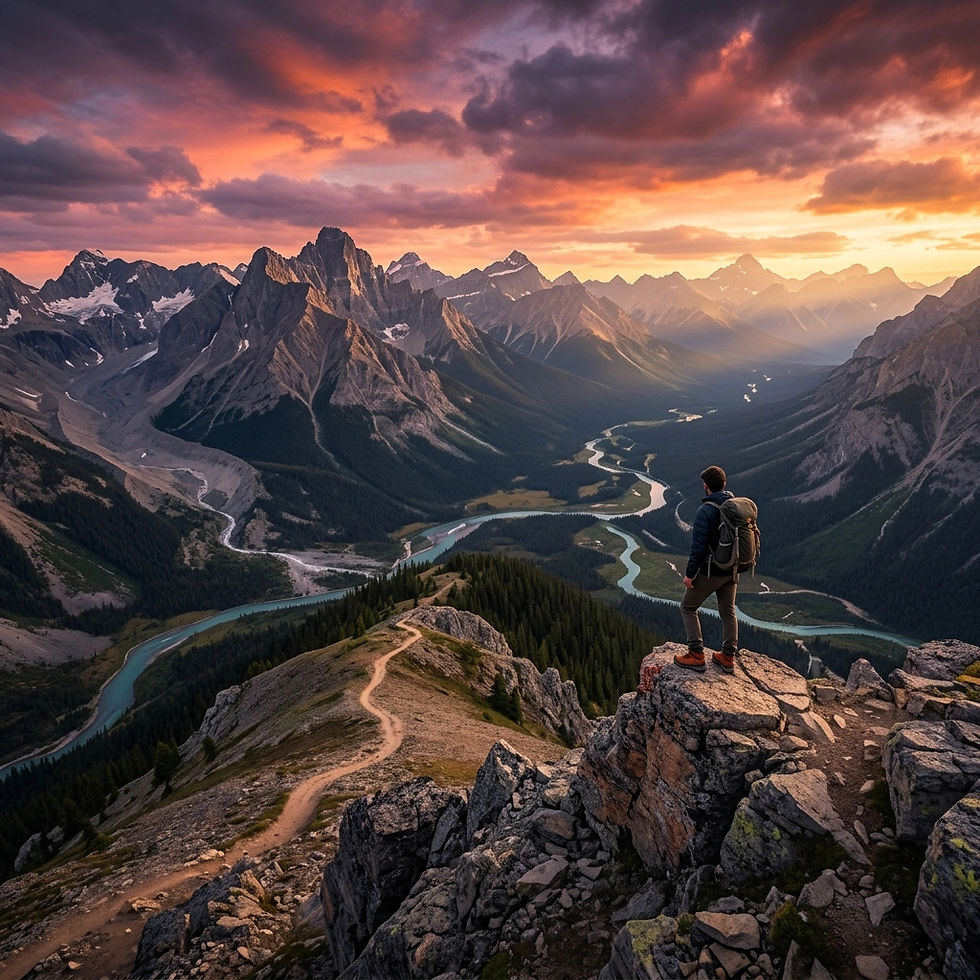
There's a particular quality that separates an AI image you scroll past from one that stops you entirely. Usually, that quality is cinematic. Cinematic AI art doesn't just depict a scene — it creates the feeling of a scene. The dramatic light hitting just one side of a face. The wide, sweeping composition that makes a landscape feel genuinely vast.
What 'cinematic' actually means
The word cinematic gets used loosely, but it has specific visual qualities: dramatic lighting (cinema rarely uses flat, even light — it favours contrast), colour grading (films process their colour deliberately to create emotional tone — warm golden tones for nostalgia, cool blue-green for tension), widescreen compositions, depth and focal attention, and narrative tension (a cinematic still feels like a frame from a larger story).

The core cinematic prompt vocabulary
Style anchors: cinematic, cinematic photography, cinematic still, film still, movie still, anamorphic lens, anamorphic widescreen, colour graded, film-graded, film grain, 35mm film. Lighting: dramatic lighting, dramatic shadows, chiaroscuro, rim lighting, golden hour, blue hour, lens flare, volumetric light, god rays. Colour: teal and orange colour grading, warm amber tones, desaturated palette, high contrast. Composition: wide shot, low angle, deep focus, rule of thirds, symmetrical composition.
Building a cinematic prompt step by step
Starting point: 'a woman on a street.' Add a scene: 'a woman standing alone on a rain-soaked city street at night.' Add style: 'cinematic photography.' Add lighting: 'neon lights reflected in puddles, rim lighting, dramatic shadows.' Add mood: 'melancholy, isolated.' Add composition and technical: 'medium shot, shallow depth of field, film grain, colour graded.' That final prompt will produce something dramatically more compelling than the starting point.
Aspect ratio: the shape of cinema
Cinematic images almost always benefit from a widescreen aspect ratio. In Midjourney, add --ar 16:9 or --ar 21:9 (ultra-widescreen, the anamorphic format used in many prestige films). The horizontal emphasis creates space, scale, and a sense of epic breadth that a square image simply can't achieve.
Cinematic portraits: the character close-up
Cinematic style isn't only for landscapes and action. Some of the most striking cinematic images are close-up character portraits. For cinematic portraits: 'a weathered fisherman in his 60s, close-up, dramatic side lighting, deep shadows, rain on his face, film grain, cinematic, colour graded, 50mm lens.' Key elements: specific character details, directional lighting, film language, and mood.
Working with atmospheric lighting
The line between cinematic and atmospheric often blurs — and that's a good thing. Moody, atmospheric lighting is one of the things that makes cinematic images feel emotionally resonant. For a deeper guide to controlling lighting and atmosphere specifically, see the article on moody and atmospheric AI art.
Part of our AI Art Styles series:
Comments