How to Use a Prompt Library to Speed Up Your AI Art
Updated: Oct 10
There is a shortcut that most beginners don't know about — and once you find it, it changes how you learn AI art entirely. That shortcut is a prompt library. Instead of writing every prompt from scratch, guessing which words will work, and hoping for the best, a prompt library gives you a curated collection of prompts that already work.
What is a prompt library?
A prompt library is a curated, browsable collection of AI image prompts, organised by category, style, or platform. AiJoe's prompt library includes prompts across categories like cinematic sci-fi, surreal fantasy, portrait art, brutalist architecture, material studies, character design, and more. Each prompt has been selected because it produces strong, visually compelling results.
Why use a prompt library rather than writing from scratch?
Writing prompts from scratch is a valuable skill. But early in your AI art journey, it can feel like writing in a language you're still learning. A prompt library bridges that gap. It shows you what a complete, well-structured prompt looks like, which words carry weight, and how different styles are expressed in language.
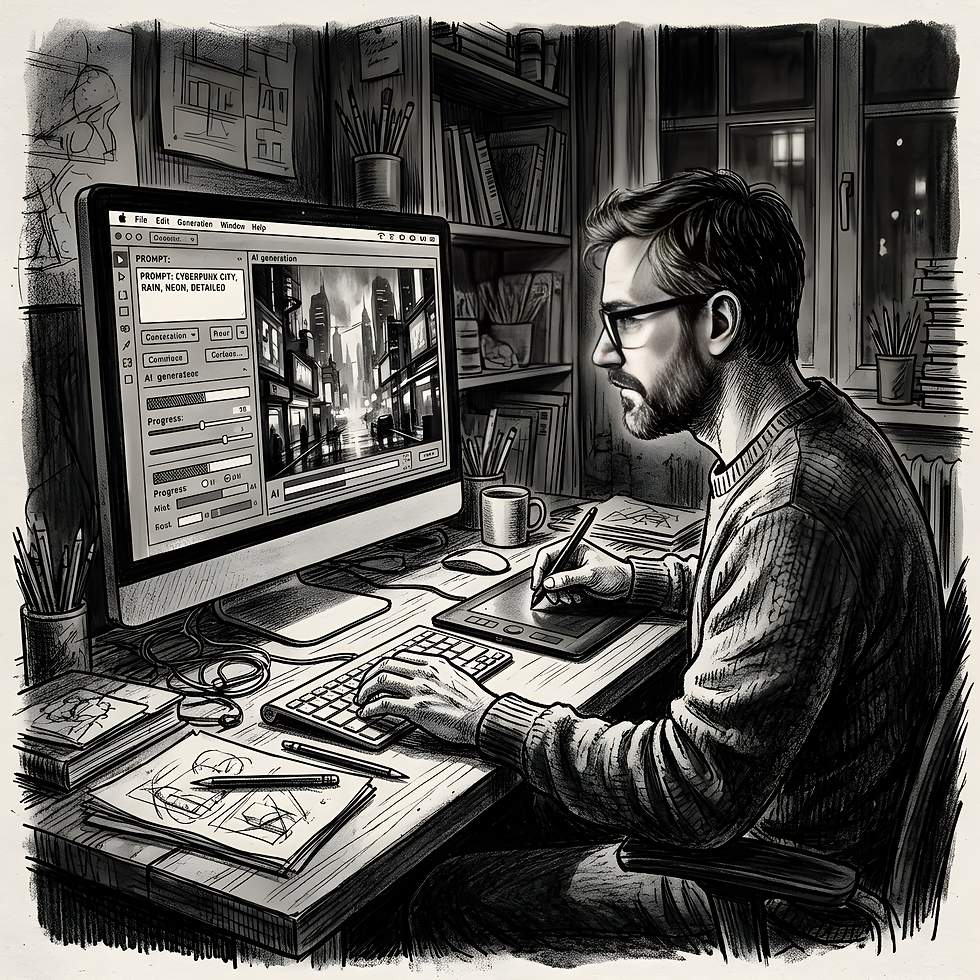
How to use the prompt library effectively
Step 1: Browse by style or category. Start by browsing for something that interests you visually. Step 2: Copy and generate. Find a prompt that looks interesting, copy it, and generate the image. Look carefully at the result. Step 3: Start tweaking. Make one change — swap the subject, change the mood word, adjust the lighting. See what happens. Step 4: Build your own. Once you've spent time adapting library prompts, writing your own becomes easier.
What to look for in a good prompt
As you browse, notice the components that appear in the strongest prompts: specificity in the subject, a named style, mood or atmosphere, lighting, and technical parameters. If you want a full breakdown of how to structure a prompt from scratch, the article on prompt structure covers it in depth.
The prompt library as a creative tool, not a crutch
Using a prompt library is not cheating. It's not lazy. It's not skipping the skill. Every creative discipline has its version of the prompt library. Musicians learn from transcribing existing songs. Painters study the work of masters. Writers read widely before they develop their own voice. The goal is to move from copying to adapting to creating.
Part of our Prompt Engineering series:



Comments